
Last updated November 20, 2026
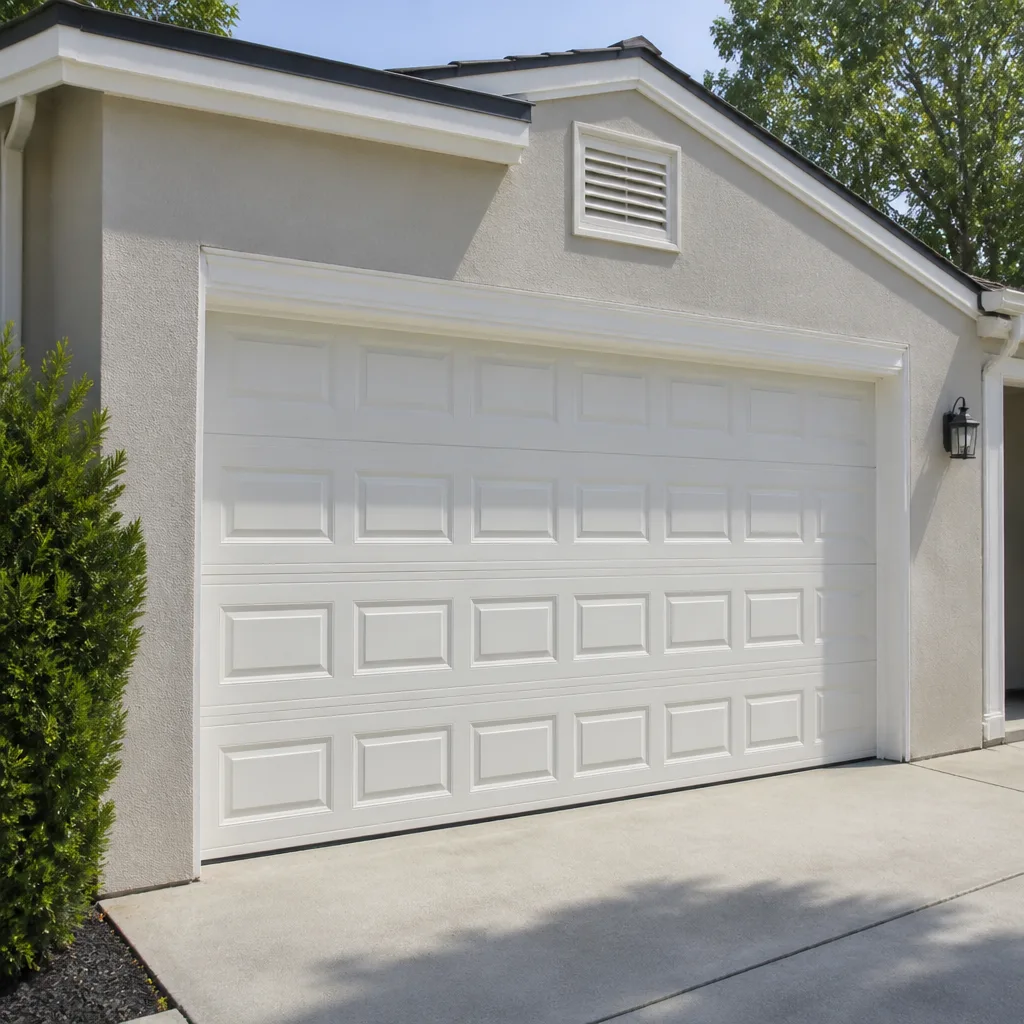 Raised-panel steel
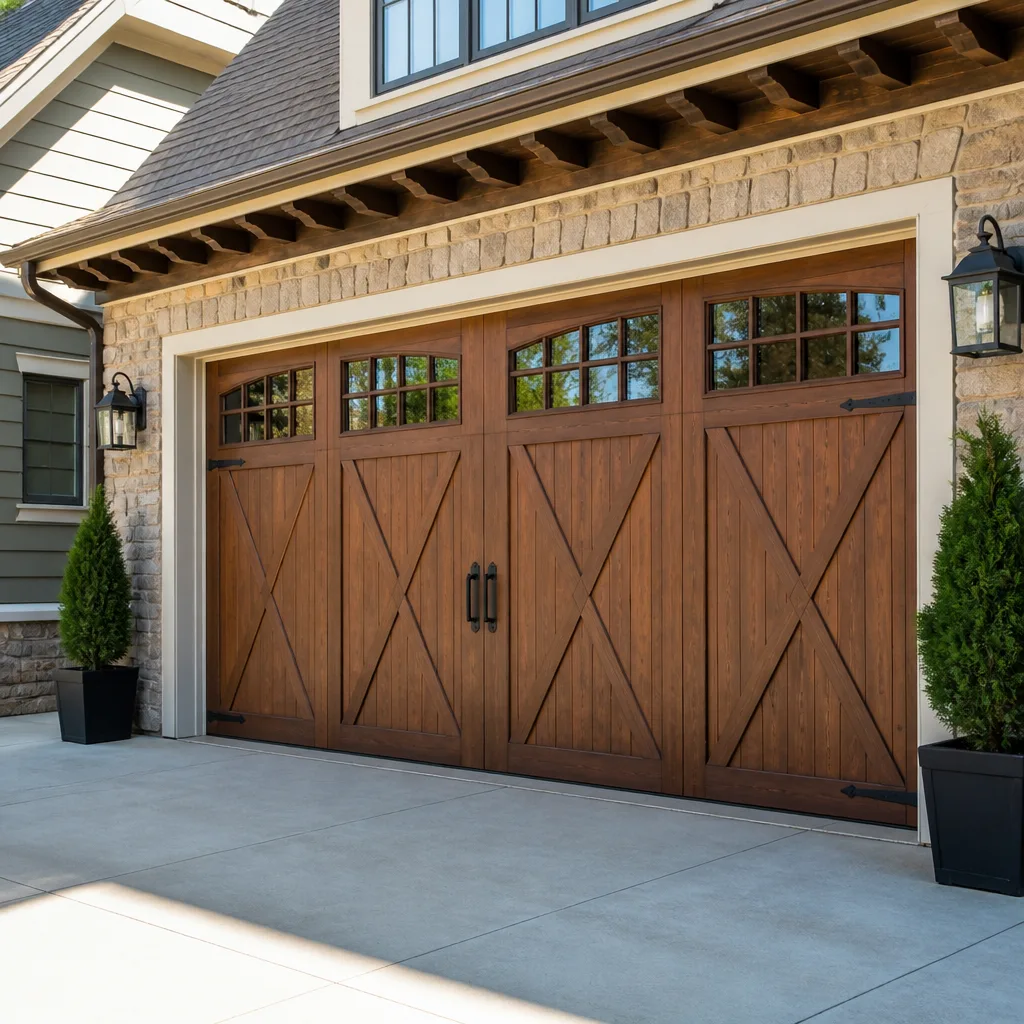 Carriage house
 Modern flush
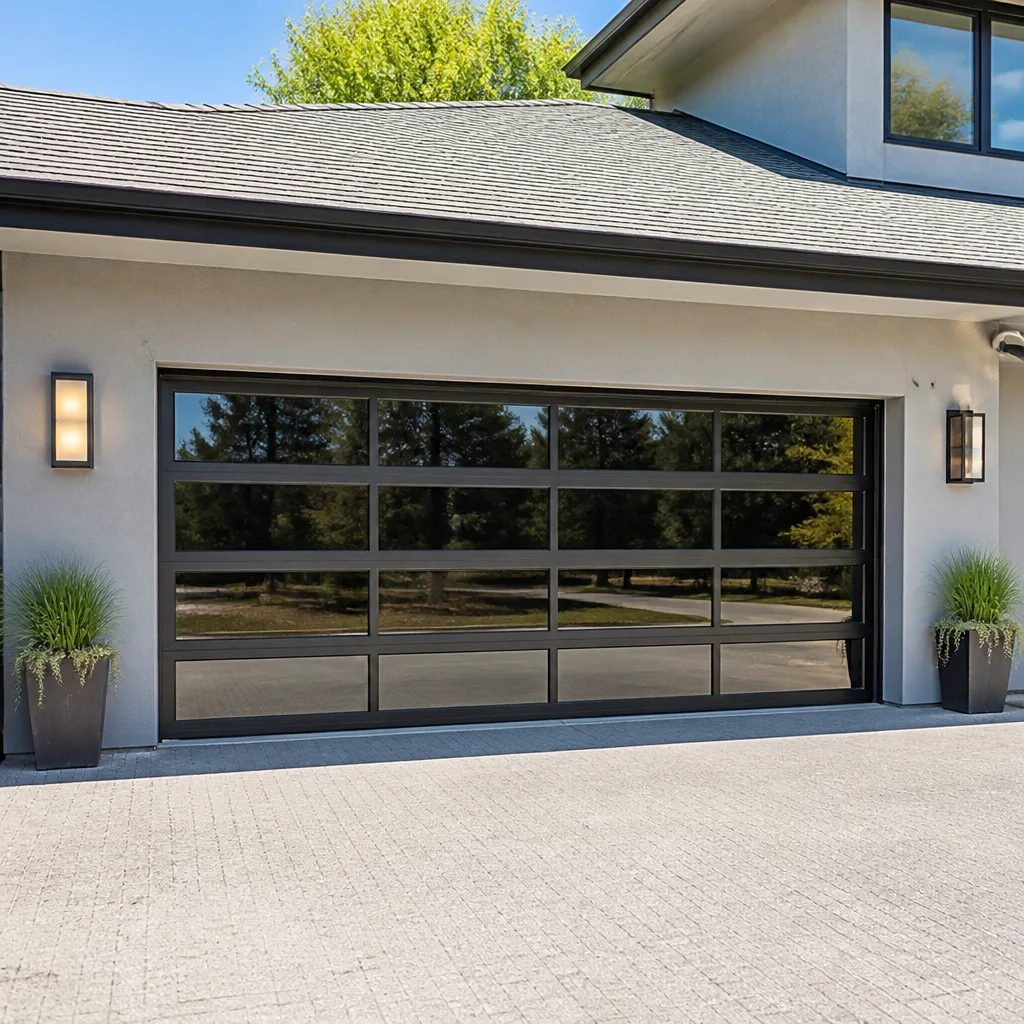 Full-view glass
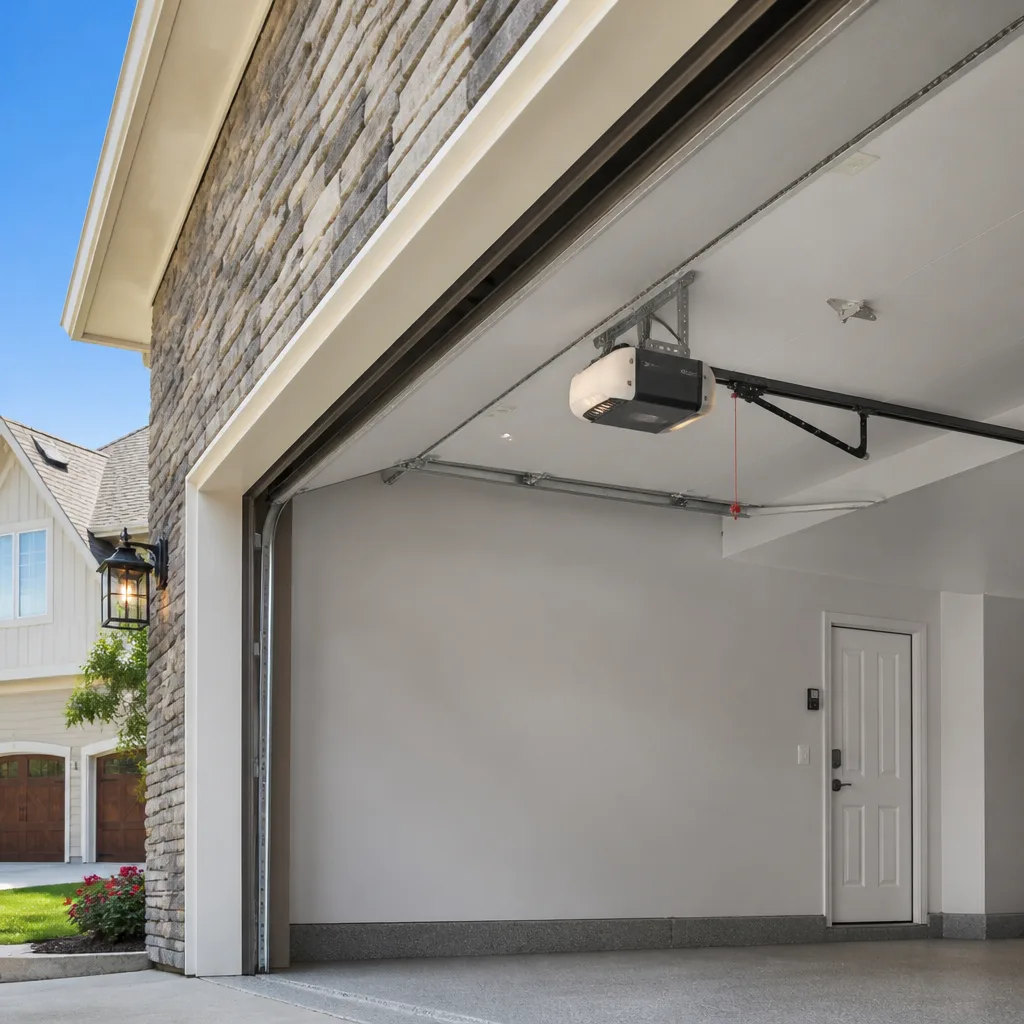 LiftMaster openers
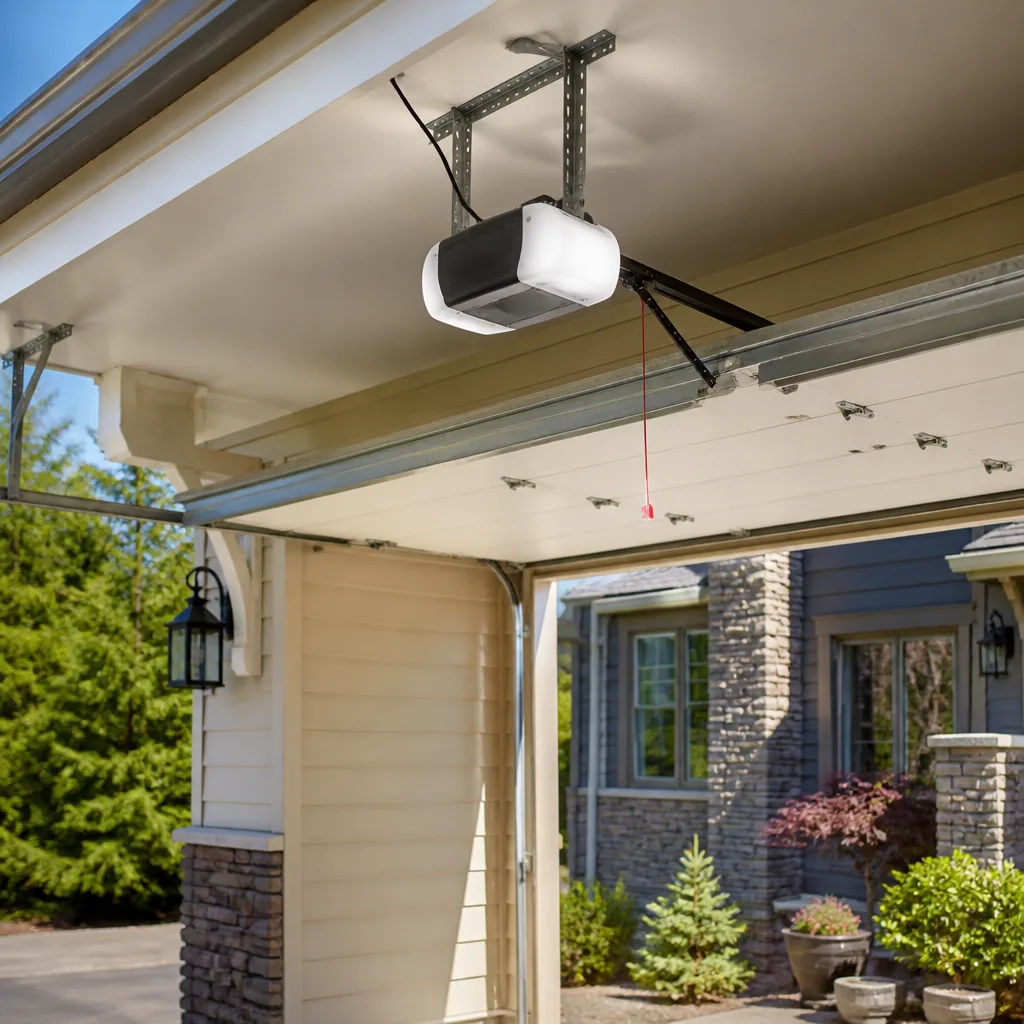 Chamberlain openers
Full 25-point door and opener safety check with every visit - springs, cables, rollers, tracks, and your LiftMaster or Chamberlain opener included
You get a price before we start. It does not change when the pro arrives.
Get your free estimateDIY vs Professional Garage Door: The Cuyahoga Falls Homeowner’s Decision Guide
Most garage door advice splits into two useless camps: “never touch it, call a pro” and “you can fix anything with a YouTube video.” Neither helps you decide. Here’s the part that actually matters. A torsion spring stores enough energy to break a wrist or worse when it releases wrong, and that isn’t a liability disclaimer tacked onto a sales pitch. It’s physics, and it doesn’t care how handy you are. But swapping a bottom seal, replacing a roller, or reprogramming a remote? Those are real DIY tasks that don’t need a service call, and pretending otherwise wastes your money. This guide draws the line precisely, task by task, for homeowners in Cuyahoga Falls. You’ll learn which jobs are safe, which ones carry genuine injury risk, what the actual savings look like, and how to be a smart participant when you do hire out.
Quick Answer
Garage door work splits cleanly into two groups: low-energy tasks you can safely do yourself (seals, rollers, remotes, lubrication, visual inspections) and high-energy tasks that require professional tools and training (torsion springs, cables, track realignment, panel replacement, opener motor swaps). The dividing line isn’t your skill level. It’s how much stored energy the part holds and what happens to that energy when something slips. Anything that holds or releases the door’s weight belongs to a trained technician.
Styles & brands we work with
- Raised-panel steel
- Carriage house
- Modern flush
- Full-view glass
- LiftMaster openers
- Chamberlain openers
Table of Contents
- Where the DIY line actually falls in Cuyahoga Falls
- The spring physics that decide the question for you
- The five garage door jobs that are genuinely DIY-safe
- The jobs that need professional tools and training
- What DIY actually saves you, and what it costs when it goes wrong
- What Cuyahoga Falls technicians find after a DIY attempt
- How to be a smart participant when you hire a pro
- The step-by-step pre-call checklist
Where the DIY Line Actually Falls in Cuyahoga Falls
The useful way to sort garage door jobs isn’t by difficulty. It’s by stored energy. Every part on a garage door either holds energy, transfers energy, or controls energy, and the ones in the first two categories are where people get hurt. A torsion spring under tension, a cable under load, a door panel riding on a track: these parts are doing real work even when the door is sitting still. The parts that just seal, cushion, or communicate with the opener hold almost none.
In Cuyahoga Falls, that split plays out in a specific way. Our winters bring repeated freeze-thaw cycles, and the rubber bottom seal on a door takes the worst of it. Salt and grit from the driveway get ground into that seal every time the door closes, and it cracks and stiffens long before the rest of the door shows wear. Replacing it is a fifteen-minute job with a pair of pliers and a new seal cut to width. Meanwhile, the same cold makes steel springs more brittle, and a spring that’s been cycling through an Ohio winter is closer to failure than one in a milder climate. A brittle spring is exactly the kind you don’t want to be near when it lets go.
The housing stock matters too. Cuyahoga Falls has a lot of mid-century homes with original single-car garages and older extension-spring doors, alongside newer two-car builds with torsion systems. Extension springs run along the track above the door. Torsion springs mount on a shaft across the top. They fail differently, and the safety cables on an extension spring are the single most important piece of hardware on the whole door. If you look up and see bare extension springs with no cable running through them, that’s a job for a professional, full stop. It’s not a DIY upgrade.
We work on the system that’s already on your house, whether that’s a Clopay door from the 1990s or a newer Wayne Dalton with a belt-drive opener. The classification below applies to all of them, because the physics don’t change with the brand.
The Spring Physics That Decide the Question for You
A torsion spring is a tightly wound coil of steel that holds the entire weight of the door in tension. When it’s wound to the correct setting, it stores enough energy to lift a door that weighs well over a hundred pounds. That energy is always there, even when the door is closed and everything looks calm. Releasing it in a controlled way requires two winding bars, a steady hand, and a clear understanding of how many turns the spring is wound to. Releasing it wrong means the spring unwinds in an instant and whatever is in its path takes the hit. Winding bars can slip. Hands get caught. The margin for error is small and the consequence is not a bruised ego.
This is why torsion spring replacement isn’t a “harder” DIY job. It’s a different category of risk. There’s no version of the task where you slowly work up to it and feel it out. The very first turn of the winding bar is the dangerous one, and a homeowner doing it for the first time has no muscle memory for the feel of a slipping bar.
Extension springs carry the same caution, and the safety cable question is separate. Those springs run along the track and stretch as the door closes. When one breaks, it snaps back toward the wall or toward whatever is nearby. A safety cable threaded through the center of the spring contains that snap. A spring without a cable is a projectile waiting for the wrong moment. Even with a cable, replacing the spring means handling a loaded part. Technicians who do this daily treat it as the highest-risk repair in the trade, and that’s the right frame for a homeowner too. If a spring is broken, sagging, or making a sharp bang when the door moves, call and book it. The spring repair page walks through the full process if you want to understand what’s involved without doing it yourself.
One more thing on springs: they’re almost always replaced in pairs. A matched set wears at the same rate, and replacing one leaves the other to fail soon after. When you get a quote, ask whether it’s for one spring or a pair. That single question tells you a lot about how the quote was built.
The Five Garage Door Jobs That Are Genuinely DIY-Safe
These are the tasks we’d hand a homeowner a screwdriver for without a second thought. None of them involve stored energy, none of them put you under a loaded part, and all of them are within reach of basic household tools. Doing them yourself saves a service call and keeps the door running smoothly between professional visits.
- Replacing the bottom seal. The rubber seal at the bottom of the door keeps out water, drafts, and pests. Pull the old one out of its track, cut the new one to width with a utility knife, and press it in. This is the highest-value DIY job on a Cuyahoga Falls door, because the freeze-thaw cycle destroys seals faster here than in milder climates.
- Swapping a roller. A worn roller makes the door rumble and drag. With the door fully open and the tension off that section, a roller slides out of its hinge bracket and a new one slides in. Nylon rollers run quieter than the steel originals on older doors.
- Reprogramming a remote or keypad. A dead remote or a keypad that’s forgotten its code is a five-minute fix with the opener’s manual and the learn button on the motor housing. Every major opener brand uses the same basic pairing process.
- Lubricating the moving parts. A garage door has hinges, rollers, and a track that all benefit from a proper garage door lubricant once or twice a year. Avoid grease, which collects grit. A light spray lube on the hinges and roller bearings keeps the door quiet and extends the life of the parts.
- Visual inspection and the balance test. Disconnect the opener with the release handle and lift the door halfway by hand. A balanced door stays put. One that drops or rises on its own has a spring or tension problem, which is your signal to stop and call. Checking the safety reverse on the opener is part of the same routine.
Note what’s on that list: nothing that holds the door’s weight. Everything here is a maintenance task or a part swap on a low-energy component. The other four items on most DIY lists, meaning springs, cables, tracks, and panels, are covered next.
The Jobs That Need Professional Tools and Training
The complement to the list above is where the risk lives. These jobs involve stored energy, structural loads, or both, and they’re where a trained technician with the right tools earns the fee. Our technicians have up to 10 years of experience on exactly this work, and every job is a garage door job. That focus is the point. A general handyman with a toolbox may be able to do some of these, but the tools and the feel for a loaded spring come from repetition on garage doors specifically.
- Torsion and extension spring replacement. The highest-risk job in the trade. Winding bars, proper tension, and a matched pair are all non-negotiable. This is core specialty work, not a side task.
- Cable replacement. Cables are under load from the springs, and a frayed or snapped cable means a door that can drop. Replacing one means releasing tension safely, which puts it in the same category as spring work.
- Track realignment and door leveling. A door that’s jumped its track or sits crooked needs the track adjusted along its full length while the door’s weight is managed. Forcing a track back by hand can bend the door.
- Panel and section replacement. Swapping a bent or damaged panel means supporting the door’s weight, releasing the section, and matching the panel to the door’s existing model. We work with Amarr, Clopay, Wayne Dalton, and Raynor panels among others, and matching a panel to an older door takes the right part, not a generic one.
- Opener motor and logic board replacement. When the opener itself has failed, swapping the unit means disconnecting the door, resetting the travel limits, and reconnecting the safety sensors. This is the kind of garage door opener repair we do across every major brand, from a Craftsman chain drive to a LiftMaster belt unit.
- Full door installation. A new door is a measured, ordered job, not a same-day swap. It involves the door, the tracks, the springs, and often the opener, all sized to the opening.
If any of these are on your list, the honest answer is that the DIY savings don’t cover the risk. A broken spring or a door off its track is also a security problem, since the garage is often the way into the house. We answer 24/7, and fast dispatch runs from 7am to 7pm, Sunday through Friday, for exactly this kind of call. The garage door repair page covers the repair side in more depth.
What DIY Actually Saves You, and What It Costs When It Goes Wrong
Here’s the honest math. On the DIY-safe list, you’re saving a service call and paying for a part, which is a real, worthwhile savings and one we’d never talk you out of. On the professional list, the savings look bigger on paper because the parts can be cheaper than a full repair bill, but the exposure is the whole calculation. A torsion spring is a loaded steel coil. Getting the winding wrong doesn’t save money. It turns a repair into an injury or a collapsed door, and the correction costs more than the original job would have. That’s the trade, stated plainly.
As a rough way to think about the split, here’s how the two categories compare without pretending to quote your specific door:
- DIY-safe parts (seal, roller, remote): modest part cost, no real exposure beyond a wasted afternoon. Worth doing yourself.
- Springs and cables: the risk of injury or a dropped door far outweighs any part-cost savings. These are jobs where the technician’s tools and experience are the value.
- Tracks and panels: a bent track or a mismatched panel is a repair that grows. Getting it right the first time is cheaper than a second visit.
- Opener swaps: a miswired or misaligned opener can leave the safety reverse working improperly, which is a genuine hazard. This is the one DIYers most often attempt and most often get wrong.
The other cost that never shows up on a parts list is the correction. When a homeowner starts a spring job and stops partway, the technician arrives to a door that’s half-disassembled and under uncontrolled tension. That’s a bigger job than the original repair, and it’s the visit we most want to prevent. The cheapest path is always the one where the risky task never gets started.
One reassurance on pricing: the price is quoted and agreed before any work starts, and the written estimate sets the final price. That’s true whether the job is a single roller or a full replacement. There’s no surprise invoice after the fact. If you want to know what garage door spring repair typically runs, that page has the ranges.
What Cuyahoga Falls Technicians Find After a DIY Attempt
We see the aftermath of DIY attempts often enough to recognize the patterns. These aren’t horror stories. They’re predictable mistakes that show up on a service call, and most of them would have been avoided by stopping before the dangerous part.
- A spring job stopped partway. The most common and most serious. A homeowner gets the door up, realizes the winding is more than they expected, and leaves it. The technician arrives to a loaded door that needs to be brought back to a safe state before any repair begins.
- A roller installed with the door under tension. Swapping a roller with the door down and the spring loaded can bind or damage the hinge bracket. The door has to be open and the section relaxed first, which is a detail the video often skips.
- An opener installed without resetting travel limits. The door closes hard or reverses too late. The safety reverse is the part that protects anything in the door’s path, and it only works if it’s set correctly after the install. This is the mistake we correct most on opener replacements.
- A mismatched panel. A replacement panel that doesn’t match the door’s model leaves gaps, weakens the section, and often has to be redone. Matching a Wayne Dalton or Amarr panel to an older door means getting the right part, not the nearest one.
- Grease in the tracks. Lubricant in the track collects grit, and grit wears the rollers faster. Tracks stay dry; the rollers and hinges get the lube.
- A seal installed too short or too long. A seal that doesn’t reach the edges lets in water, and one that’s cut wrong bunches at the bottom. It’s a cheap mistake but an annoying one in a Cuyahoga Falls winter.
Correcting any of these usually costs more than the original repair would have. The pattern is consistent: the part that’s cheap to fix gets attempted, it’s the part that holds energy that causes the trouble.
How to Be a Smart Participant When You Hire a Pro
Hiring out doesn’t mean stepping back. The best customers are the ones who understand their door and can describe what’s wrong. That makes the diagnosis faster, the quote more accurate, and the result better. Here’s how to be that customer, in order.
- Describing the problem in plain terms. “It bangs when it opens” points to a spring. “It grinds and jerks” points to rollers or track. “The opener runs but the door doesn’t move” points to a broken spring or a disconnected door. The more specific the description, the better the first visit.
- Knowing your brand. Look at the opener housing for the make and model, and at the door for a sticker. LiftMaster, Chamberlain, Genie, Clopay, Amarr, Wayne Dalton, Craftsman, and Raynor are all brands we service, so knowing yours means the technician arrives prepared.
- Asking whether the quote covers a pair. Springs get replaced in pairs. Confirm the quote is for both before you compare it to anything else.
- Asking what the estimate covers. Parts, labor, and any follow-up adjustment should all be in the written estimate. Ask before work starts.
- Testing the door after the work. Run the balance test and the safety reverse check before the technician leaves. The door should stay put at halfway by hand, and the opener should reverse when it meets an obstruction. If either fails, say so on the spot.
- Keeping a record. Note the date, the work done, and the brand of any parts replaced. It makes the next call easier and helps you track wear.
That’s the whole participation list. None of it requires tools, and all of it makes the service call more efficient. It’s the difference between a technician guessing and a technician working from good information.
The Step-by-Step Pre-Call Checklist
Before you pick up the phone or pick up a wrench, run through this list. It sorts your problem into the DIY bucket or the call-us bucket in about five minutes, and it gives you the details a technician will ask for.
- Look at the door. Is it crooked, off its track, or hanging from a broken cable? If yes, stop. That’s a call.
- Listen. A sharp bang or a sudden loss of tension means a spring. Stop and call.
- Is the door stuck open or closed? A stuck door is a security issue. Call for same-day help.
- Run the balance test. Disconnect the opener and lift the door halfway. If it doesn’t stay put, the springs need attention. Call.
- Check the seal, rollers, and remote. If these are the only issues, they’re on the DIY list. You can fix them yourself.
- Find your brand. Note the door and opener make so the technician can be prepared.
- Call (877) 770-0890. We answer 24/7. Fast dispatch from 7am to 7pm, Sunday through Friday. Estimates are free.
If the checklist sends you to a call, it’s a real call. The safety caveat here is simple and specific: a loaded torsion spring, a cable under tension, or a door off its track is a hazard that a trained professional handles with the right tools. Don’t work under a loaded spring or a suspended door, and don’t try to force a track back into place. That’s the line, and it’s the whole reason a specialist exists. The broader Cuyahoga Falls garage door repair service covers all of it, from spring, opener, panel, or full door.
Common Mistakes to Avoid
- Treating a torsion spring like a harder version of a roller swap. It’s not a difficulty step up. It’s a different category of risk, and no amount of video-watching builds the feel for a winding bar.
- Buying the cheapest replacement spring. Springs are rated by cycle life, and a low-cycle spring fails sooner. In a Cuyahoga Falls climate with hard winters, the cycle rating matters more than the part price.
- Replacing one spring instead of a pair. Matched springs wear together. Replacing one leaves the other close to its own failure, and you’ll be back for it soon.
- Lubricating the tracks. Grease in the track collects grit and wears the rollers. Lubricate the hinges and rollers, leave the track dry.
- Ignoring a frayed cable or a missing safety cable. A bare extension spring with no cable through it is a projectile risk. This is the single most important safety upgrade on an older door, and it’s a professional job.
- Skipping the safety reverse test after any work. The opener’s reverse function protects whatever is under the door. Test it after any adjustment, and never trust a repair you haven’t verified.
- Forcing a track back into place by hand. A bent track means the door’s weight is being managed wrong. Forcing it can bend the door section instead, which turns a track fix into a panel replacement.
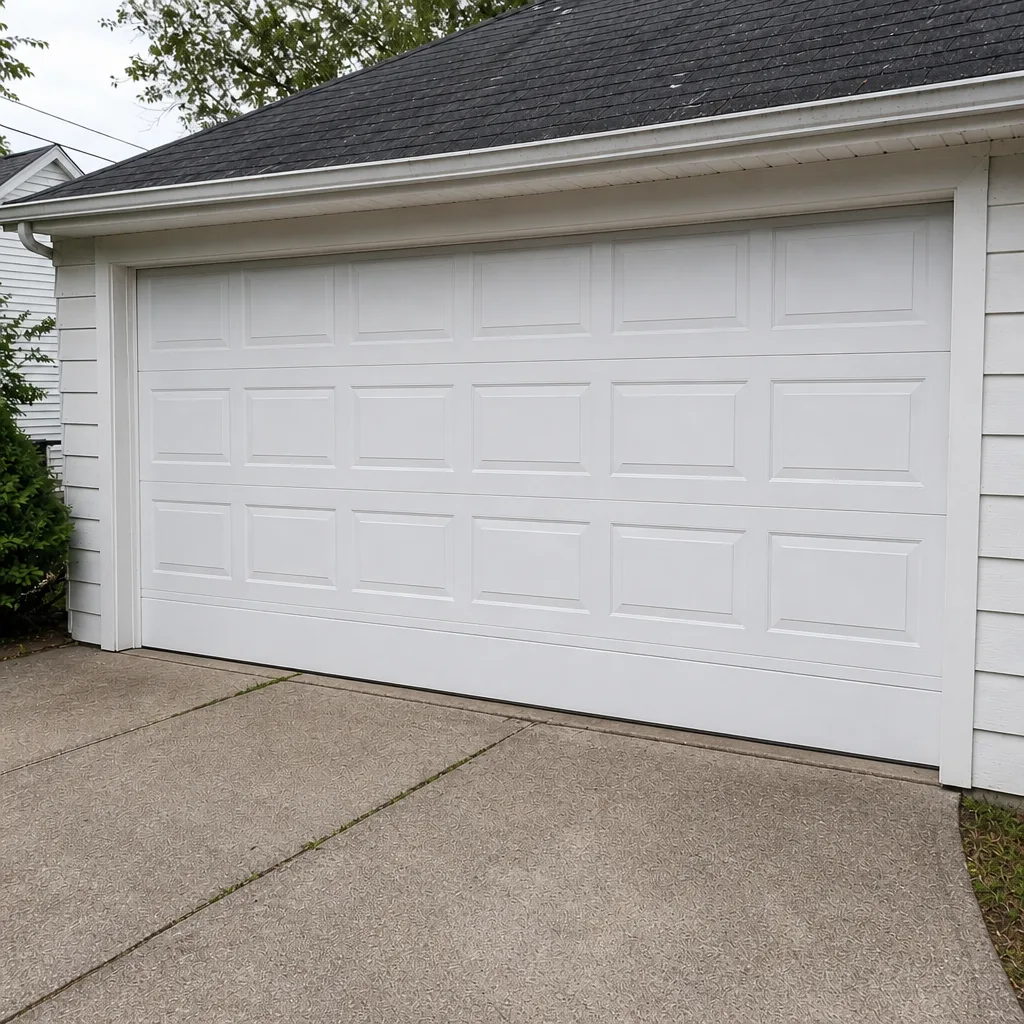
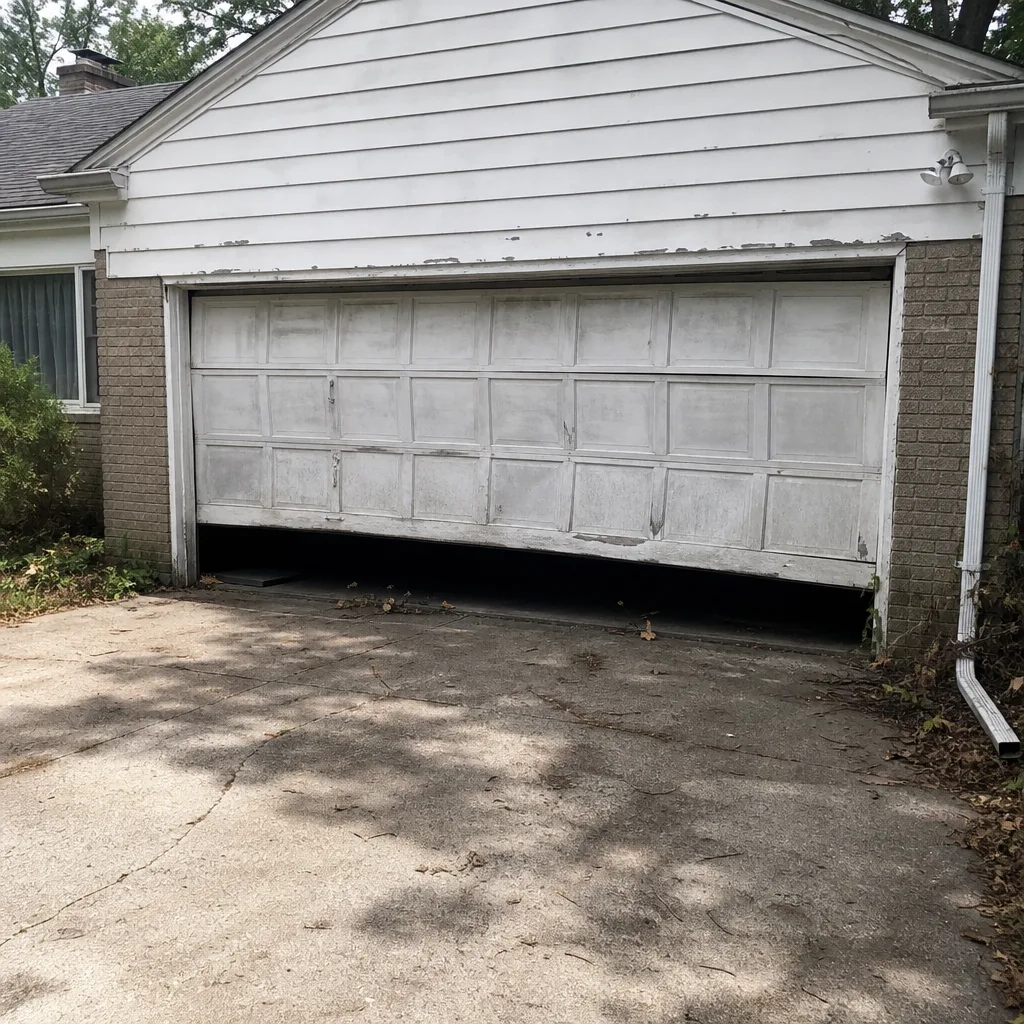
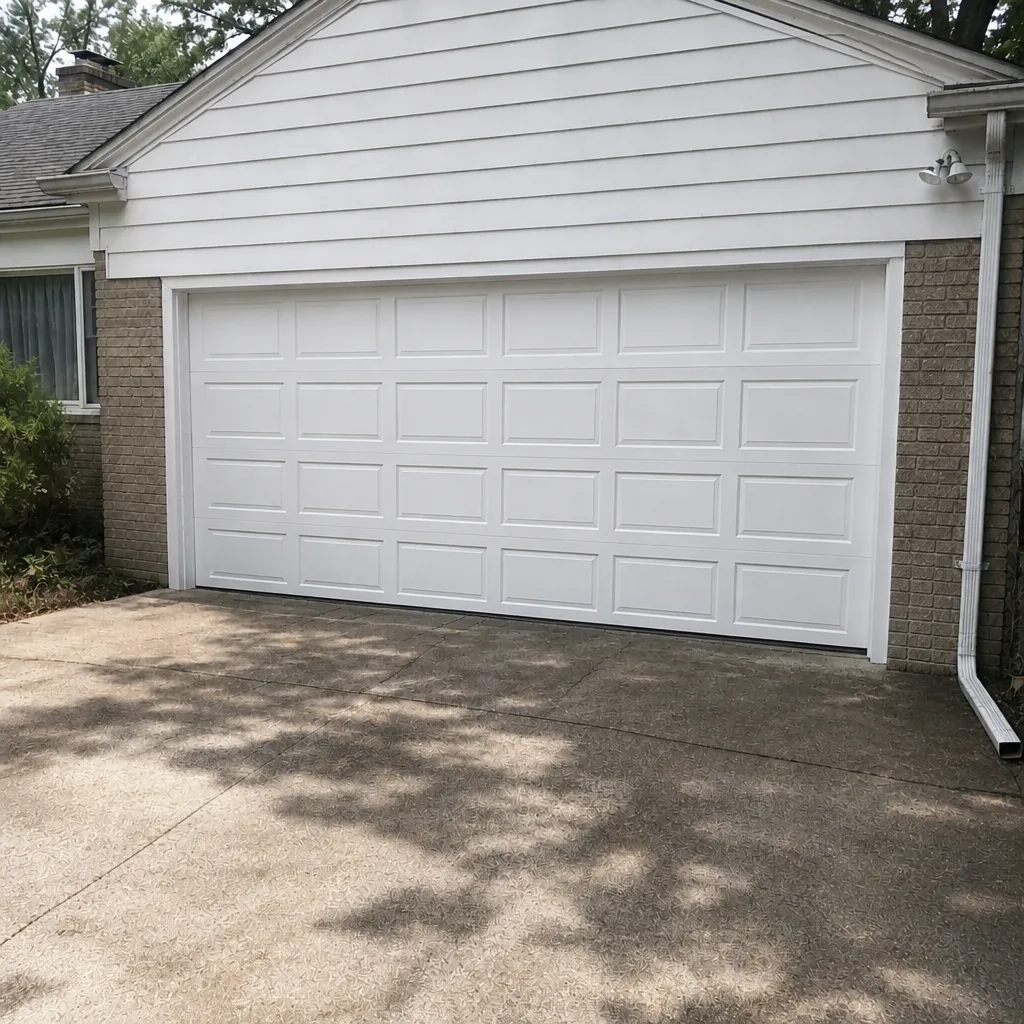
See the difference
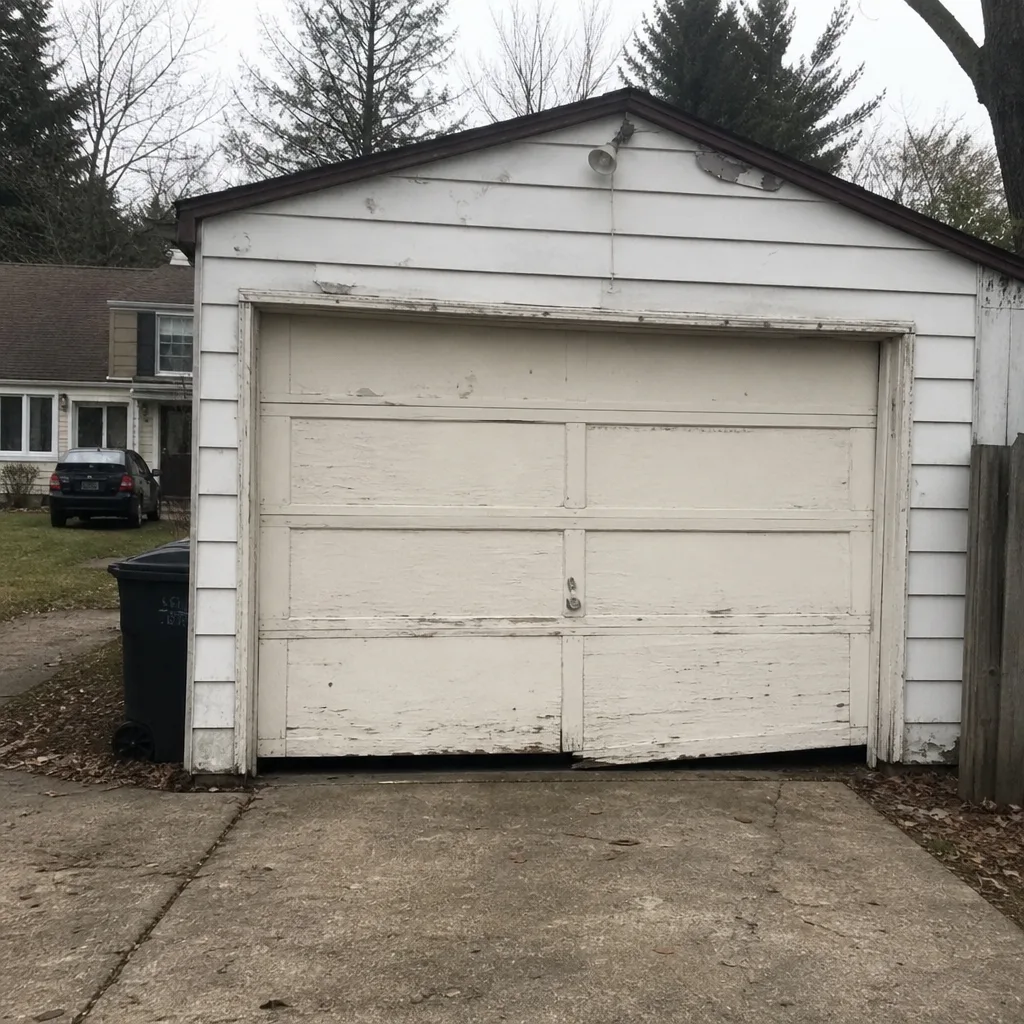 Before
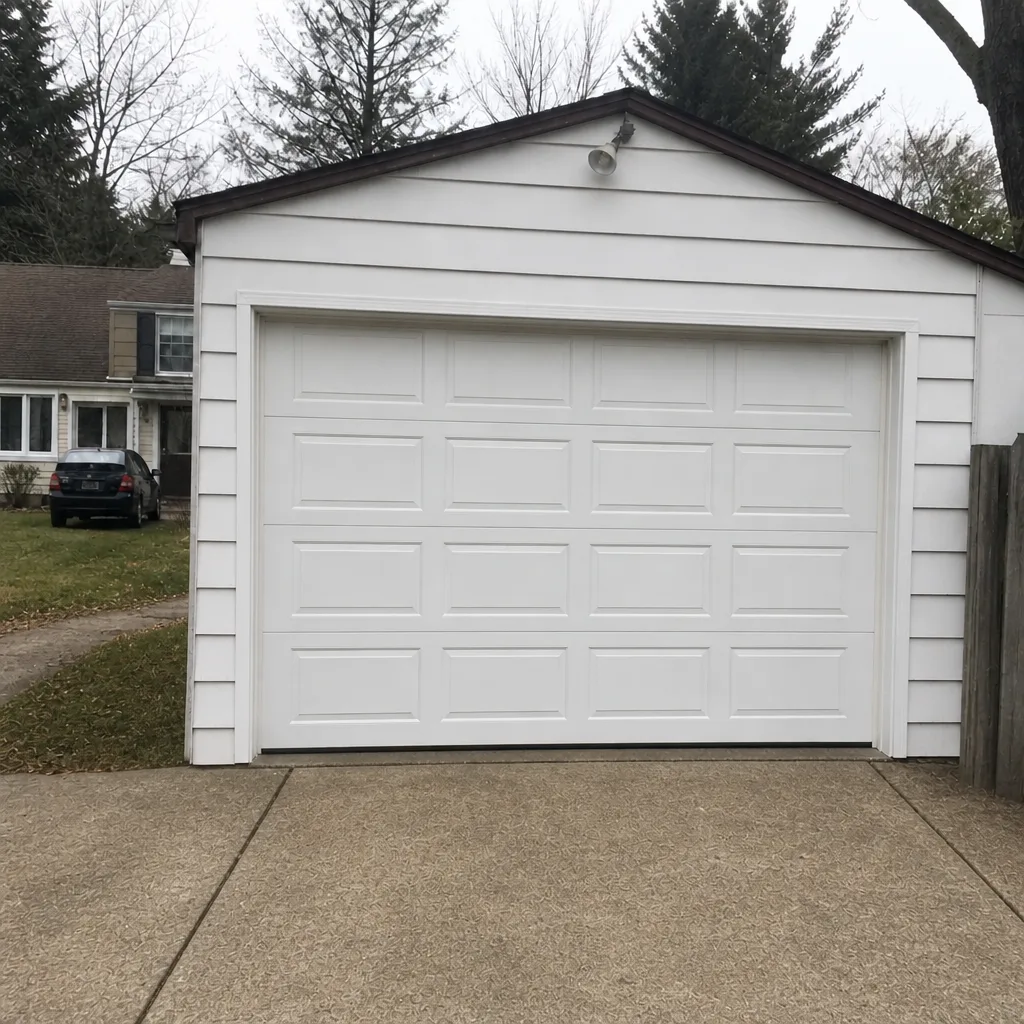 After
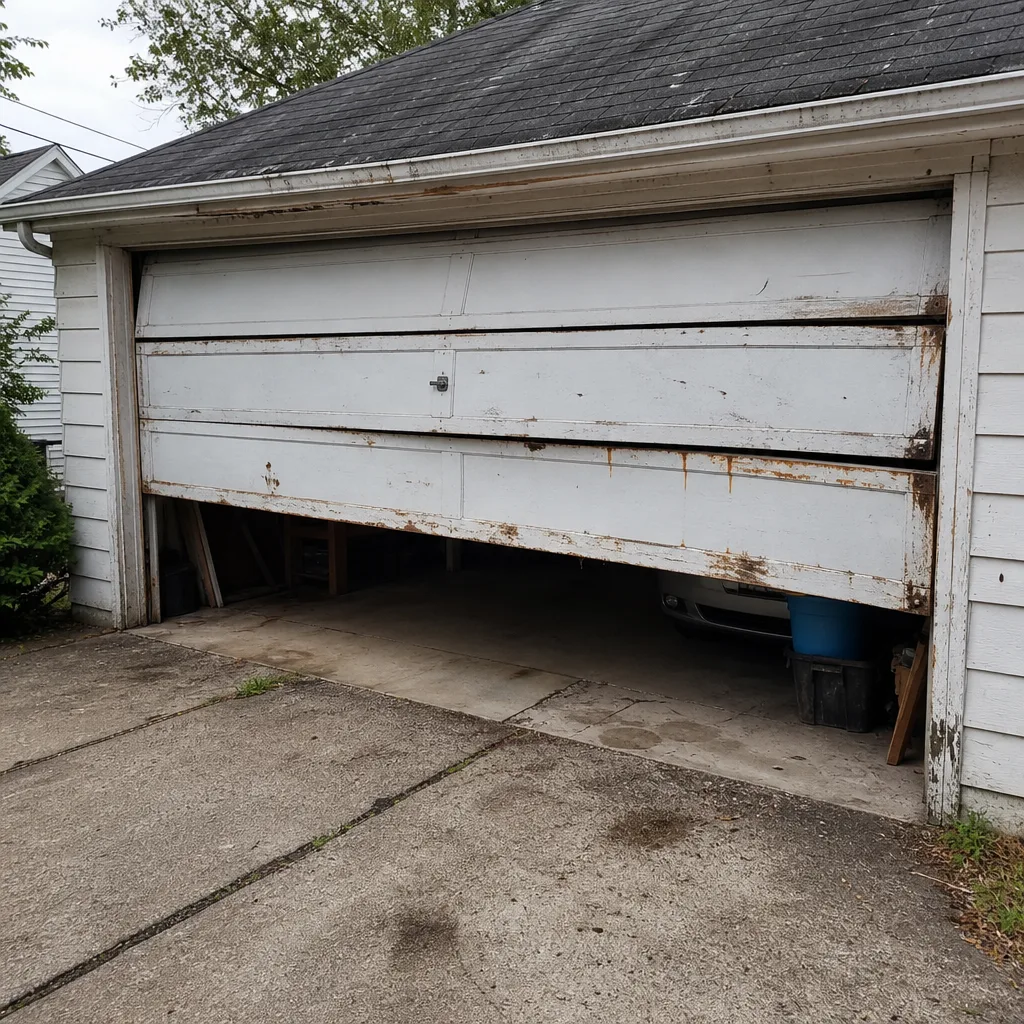 Before
 After
 Before
 After
When to Call a Professional
Call when the problem involves a loaded part, a stuck door, or anything you can’t safely test. A broken or sagging spring, a snapped or frayed cable, a door off its track, a door stuck open or closed, a panel that’s bent or hung wrong, or an opener that runs but won’t move the door all belong in the call column. A door stuck open is a security issue for a Cuyahoga Falls home, since the garage is often the way inside, so don’t leave it sitting. Our technicians have up to 10 years of experience and every job is a garage door job. We answer 24/7, fast dispatch runs from 7am to 7pm, Sunday through Friday, and estimates are free. Cuyahoga Falls Garage Door Repair offers free estimates in Cuyahoga Falls: call (877) 770-0890.
Frequently Asked Questions
No, a garage door spring is not a safe DIY job. A torsion spring stores enough energy to cause serious injury when released improperly, and winding one requires professional winding bars and training. Extension springs carry the same caution even with safety cables. Call (877) 770-0890 for an exact quote. Estimates are free.
Replacing the bottom seal, swapping a roller, reprogramming a remote or keypad, lubricating the hinges and rollers, and running a visual inspection are all safe DIY tasks. None of them involve a loaded part. Anything that holds or releases the door’s weight belongs to a professional.
Repair cost depends on the part and the job, and the written estimate sets the final price before any work starts, so you’ll never be surprised by the invoice. The price is quoted and agreed up front. Call (877) 770-0890 for an exact quote. Estimates are free.
Yes. A stuck door is a real security and safety issue, and we offer same-day and emergency service for exactly this. We answer 24/7. Fast dispatch runs from 7am to 7pm, Sunday through Friday. Call (877) 770-0890.
No. The price is quoted and agreed before any work starts, and the written estimate sets the final price. If the technician finds something different on arrival, that gets discussed and agreed before the work begins. Call (877) 770-0890 for a free estimate.
The local professional we send is licensed and insured as Ohio requires, and our technicians have up to 10 years of experience on garage doors specifically. Every job is a garage door job, not a general handyman call. Call (877) 770-0890 to book.
The Bottom Line
The DIY versus professional question is really a question about stored energy. Seals, rollers, remotes, and lubrication are low-energy tasks and fair game for a homeowner in Cuyahoga Falls, especially the bottom seal, which takes a beating from our freeze-thaw winters. Springs, cables, tracks, panels, and opener swaps hold the door’s weight and belong to a technician with the right tools. The savings on the safe jobs are real. The risk on the dangerous ones is not worth any part price. When you hire, know your brand, ask whether the spring quote covers a pair, and test the door before the technician leaves. That’s the whole decision, drawn precisely.
If your door needs a professional eye, call Cuyahoga Falls Garage Door Repair at (877) 770-0890 for a free estimate. We answer 24/7. Fast dispatch from 7am to 7pm, Sunday through Friday. From spring, opener, panel, or full door, we work on the brand you already have.
Written by the team at Cuyahoga Falls Garage Door Repair.