
Last updated November 20, 2026
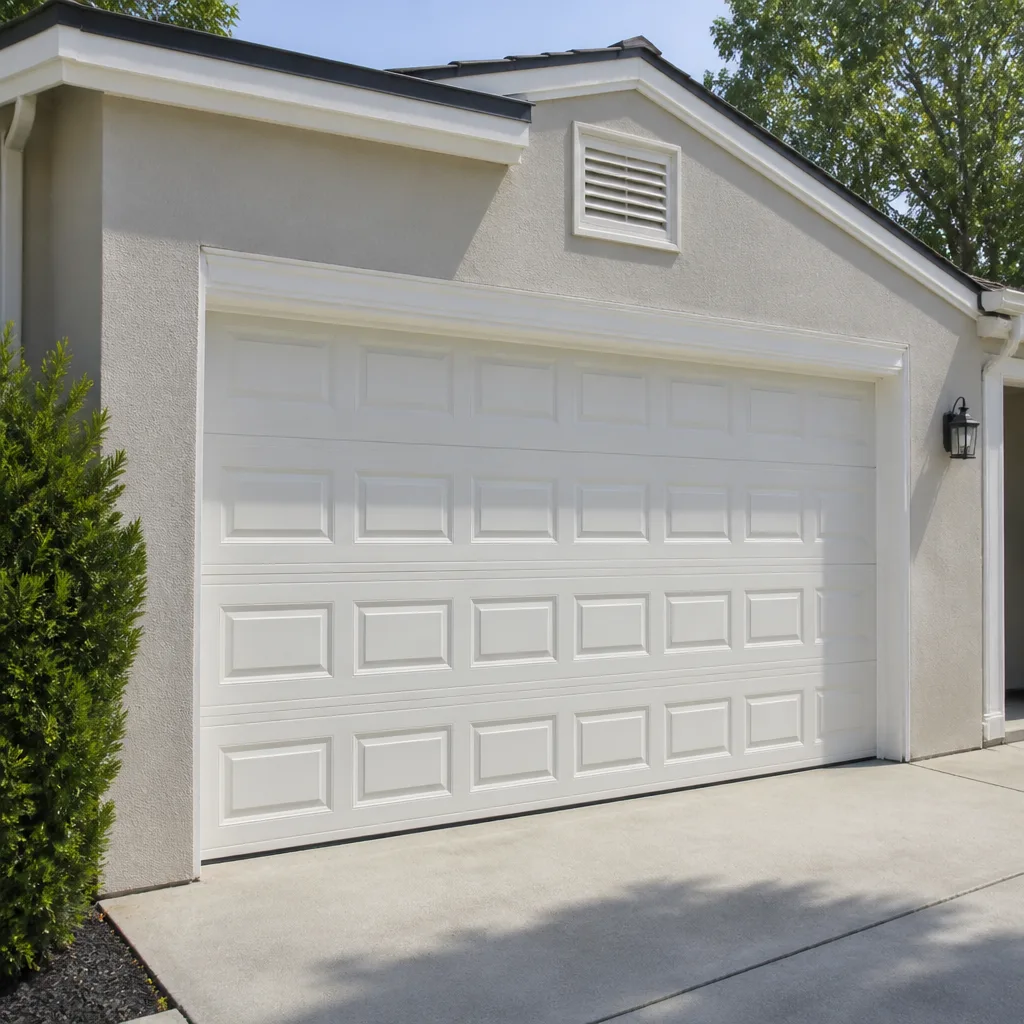 Raised-panel steel
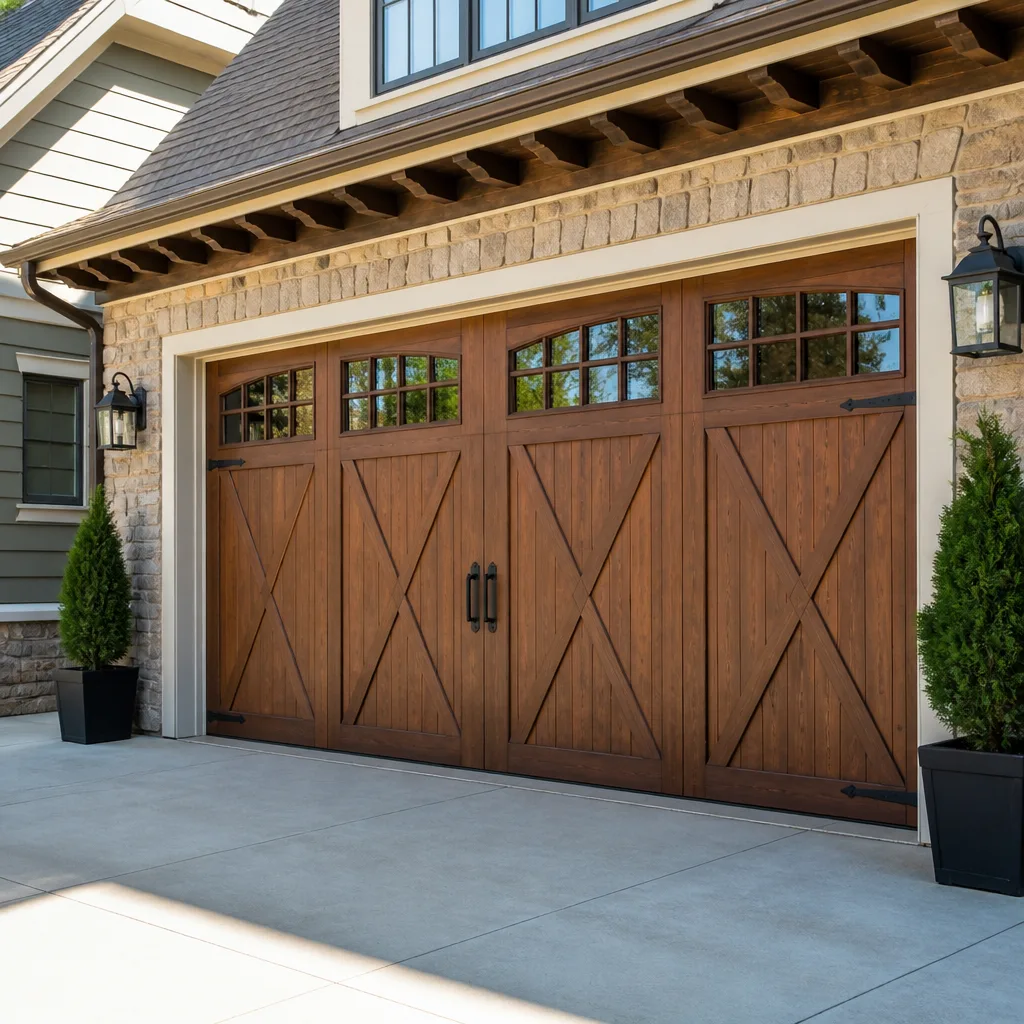 Carriage house
 Modern flush
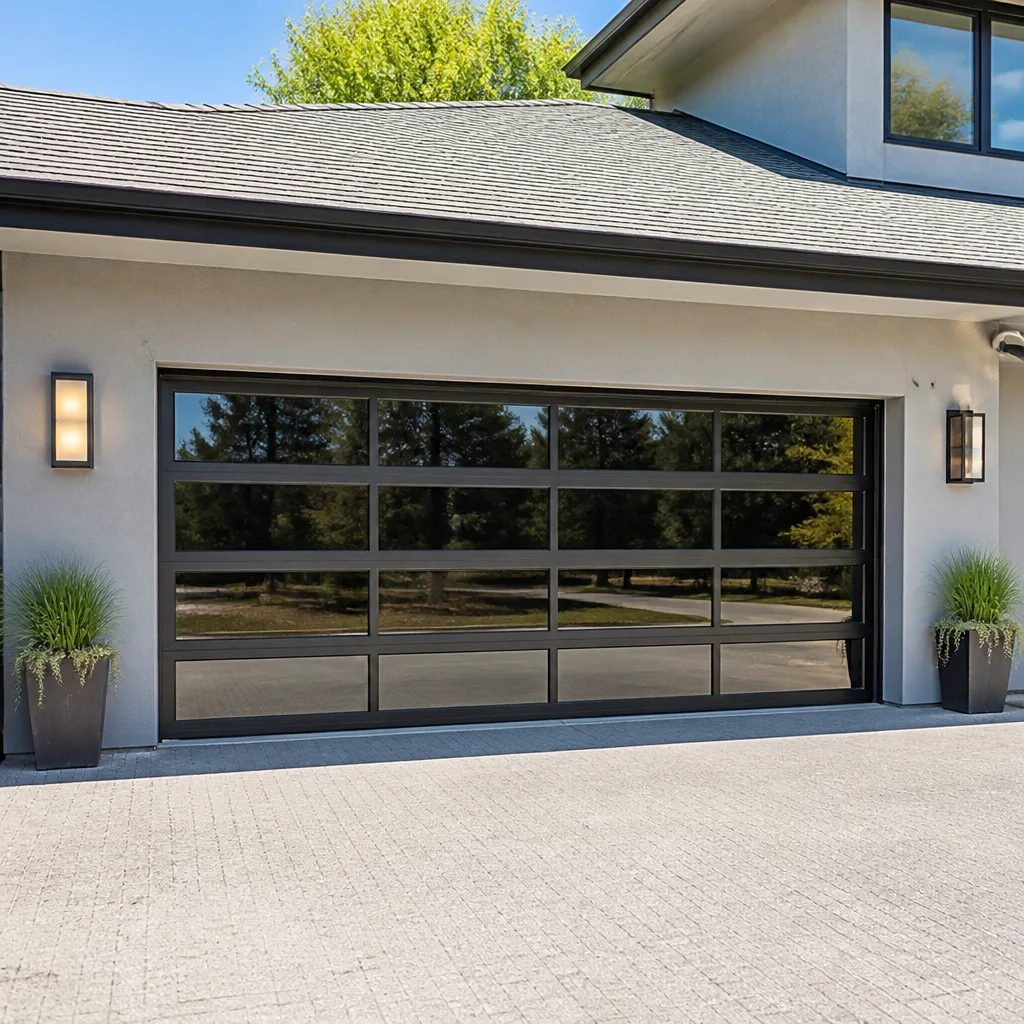 Full-view glass
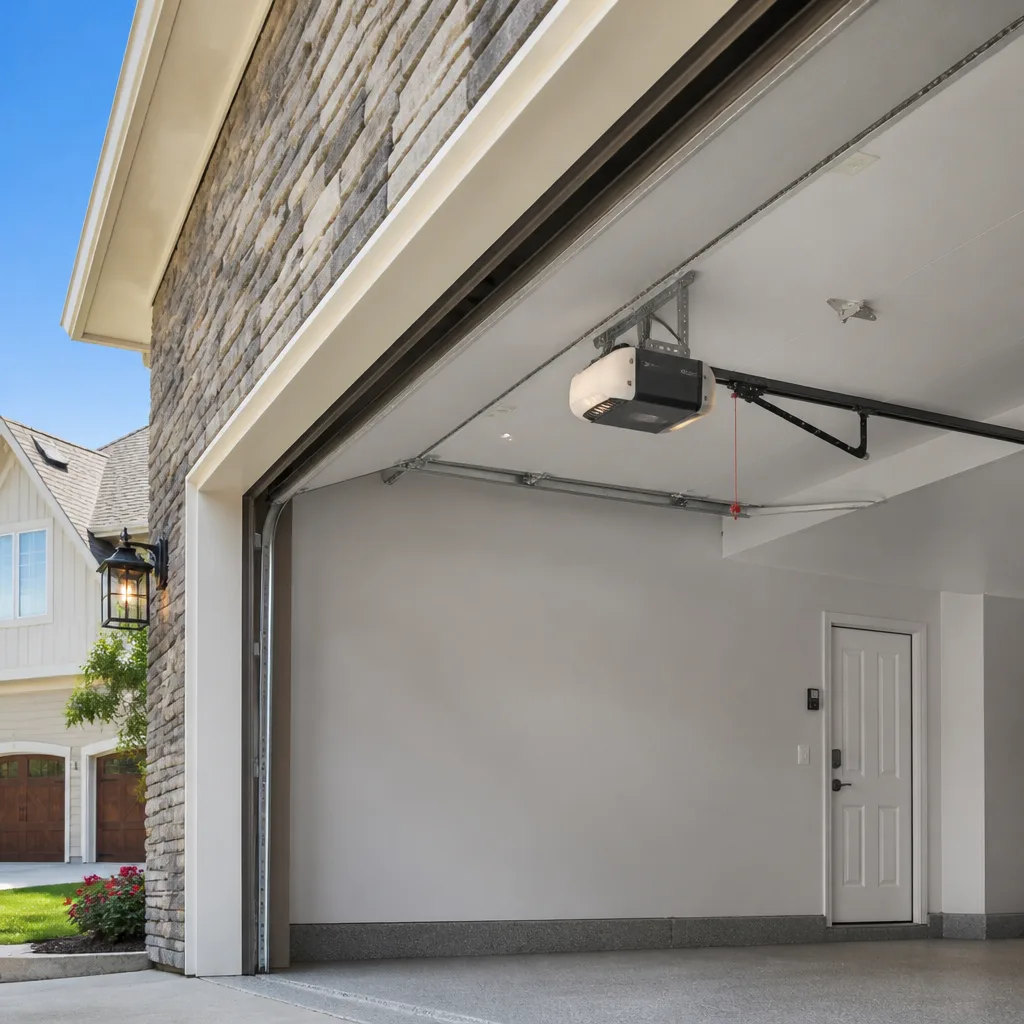 LiftMaster openers
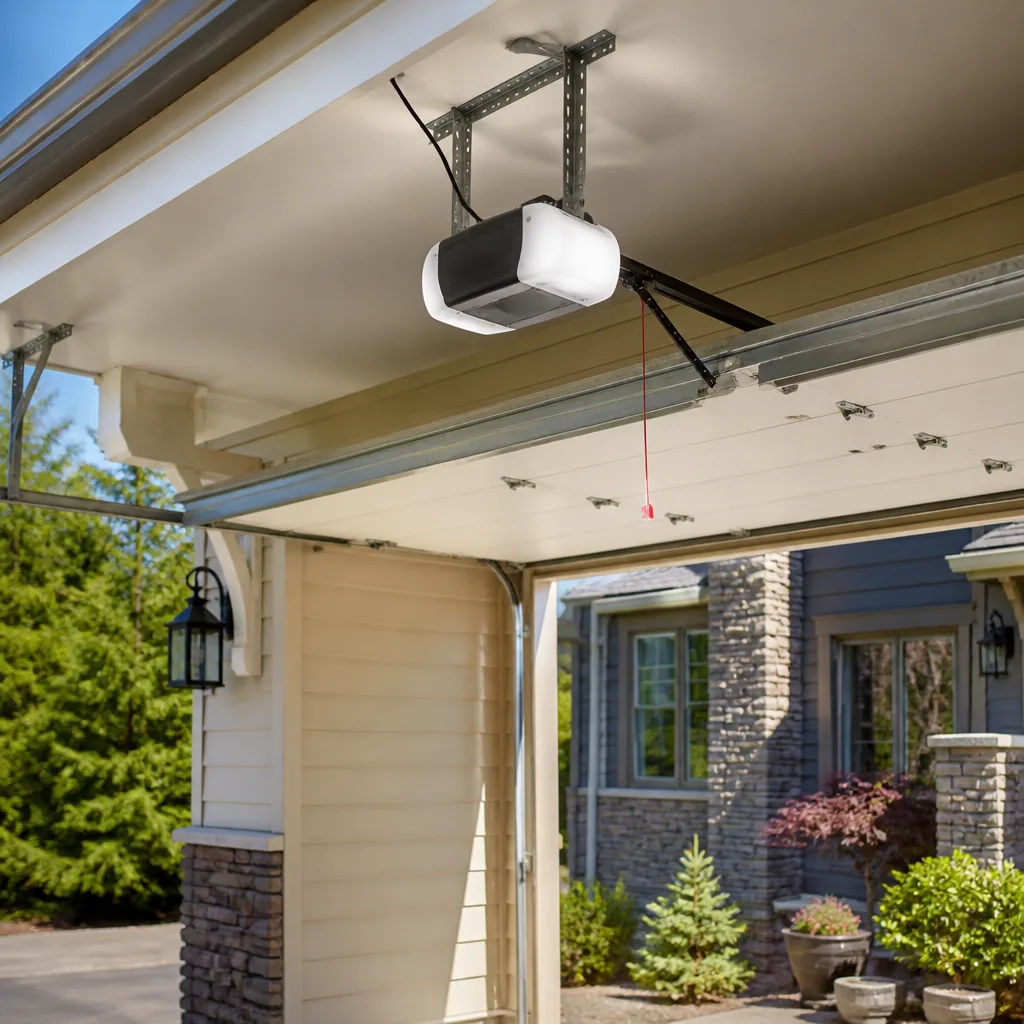 Chamberlain openers
Full 25-point door and opener safety check with every visit - springs, cables, rollers, tracks, and your LiftMaster or Chamberlain opener included
You get a price before we start. It does not change when the pro arrives.
Get your free estimateThe Complete Guide to Garage Doors in Cuyahoga Falls
Most homeowners in Cuyahoga Falls spend more time cleaning their gutters than they do thinking about their garage door. That’s backwards. A clogged downspout gives you a wet afternoon and a dirty driveway. A snapped torsion spring or a burned-out opener strands a car in the driveway and leaves the most vulnerable wall of your house standing open. Your garage door is your home’s largest moving part, and it works harder than anything else attached to the structure. This guide covers what actually happens to doors in this climate, what materials hold up through a Northeast Ohio winter, how the permitting rules work, which brands dominate the local market, and how to tell a real specialist from a generalist with a ladder.
Quick Answer
A garage door in Cuyahoga Falls needs an inspection once a year, a lubricated and balanced track and spring system, a bottom seal that survives freeze-thaw cycles, and a proper steel gauge or insulated panel if the door faces the street. Repair is usually cheaper than replacement unless the panels or frame are structurally compromised. Summit County generally treats a full door replacement differently from a repair, and your city’s building department is the source for whether a permit is required.
Styles & brands we work with
- Raised-panel steel
- Carriage house
- Modern flush
- Full-view glass
- LiftMaster openers
- Chamberlain openers
Table of Contents
- How Freeze-Thaw Cycles Wear Down a Garage Door in Cuyahoga Falls
- Door Materials That Actually Survive a Cuyahoga Falls Winter
- Permits and Code: What Summit County Requires for a Replacement vs. a Repair
- Brands and Models You’ll Find on Cuyahoga Falls Homes
- Repair or Replace? A Straight Decision Framework
- How to Evaluate a Contractor in This Market
- A Year-Round Maintenance Routine for Northeast Ohio
- Springs, Cables, and the Jobs You Should Never Do Yourself
How Freeze-Thaw Cycles Wear Down a Garage Door in Cuyahoga Falls
Northeast Ohio doesn’t get one long, cold winter. It gets a series of freeze-thaw cycles that start in late fall and run into early spring. Water gets into a seam or a seal overnight, the temperature drops below freezing, that water expands, and something loses. The cycle repeats dozens of times between November and March, and every repeat does a little more damage to the parts of your door that sit lowest and work hardest.
Here’s how freeze-thaw shows up on doors across Cuyahoga Falls:
- Bottom seals harden and crack. The rubber or vinyl astragal at the bottom of the door is the first casualty. Once it loses flexibility, cold air and moisture get under the door, and that moisture freezes into a ridge that the door drags against every time it opens.
- Track alignment shifts. The ground under the driveway apron and the door slab heaves slightly with each cycle. The track is bolted to the wall and the floor, so when the slab lifts, the track bends. A door that rolled smoothly in October can bind and groan by February.
- Springs lose tension unevenly. Cold stiffens grease and contracts metal. A torsion spring that was properly tensioned in the fall can feel weak and slow by midwinter, which pushes the opener to work harder than it should.
- Metal panels expand and contract. Rivets and hinges loosen with the daily back-and-forth. Looseness causes vibration, and vibration accelerates wear on the opener’s gear and rail.
- Paint and finish crack at the seams. Freeze-thaw finds pinholes in the coating. Once water gets behind the finish on a steel door, rust starts at the bottom edge, where it’s hardest to see.
This is why we tell homeowners to walk the full length of the door on the outside once a month through winter, rather than just glancing at it from the car. The bottom inch and the track are where failure starts. If your door is dragging, popping, or slow to close, that is the point to book a check rather than wait for a full failure. Routine garage door repair caught in the fall is much cheaper than a repair in a cold driveway in January.
Door Materials That Actually Survive a Cuyahoga Falls Winter
The right door for Cuyahoga Falls is one that can handle wet, cold, thaw, and repeated expansion without cracking, rusting through, or losing insulation value. Big-box stores tend to push whatever is stacked in the aisle, which is usually the thinnest steel door they can sell at a headline price. That door is fine in a mild climate. It’s a poor bet here.
What we look for on a door for this market:
- Steel gauge. Thicker steel resists dents and holds paint longer. A 24- or 25-gauge steel door dents in a light bump and chips easily. A 26- or 27-gauge is heavier in the right way, but heavier doors need heavier springs and a stronger opener, so the whole system has to match. We’ll always check the door weight against the spring rating before recommending anything.
- Insulation and R-value. The foam core inside a door matters more here than in the South. It keeps the garage from pulling cold air into the house through the door between the garage and the living space, and a stable interior temperature is easier on anything you store out there. Don’t buy the R-value on the box at face value, either. A door’s real thermal performance depends mostly on the perimeter seal, so the seal and the threshold matter as much as what’s inside the panel.
- Wood and wood-composite. Real wood moves with humidity and needs refinishing to last. In this climate, wood looks beautiful but demands ongoing care. Wood-composite doors are a reasonable compromise if the homeowner wants a wood look and accepts that upkeep.
- Aluminum and glass. Popular on some contemporary homes. Aluminum is light and resists rust, but it dents more easily and can be cold to the touch. Glass panels should be tempered and properly sealed against moisture.
- Finish and weatherstripping. Every door in Northeast Ohio needs a well-fitted bottom seal, side seal, and top seal, and a galvanized or stainless threshold where the door meets the floor. The best door in the world with a sagging seal will let cold air, snow melt, and pests into the garage.
If your current door is a thin builder-grade panel with a broken seal and a rusting bottom, that’s the case where replacement makes sense. We install Clopay and Amarr doors, both of which are built to handle cold climates when specified correctly. But we’d rather fix what you already own if it’s still structurally sound, because a proper seal and balance job can get another decade out of a decent door.
Permits and Code: What Summit County Requires for a Replacement vs. a Repair
The short version: a repair usually doesn’t need a permit, and a full replacement usually does, but the exact answer depends on the city and the scope of the work. Always confirm with your city’s building department before work begins. We don’t guess for you, and we don’t want you to guess for yourself.
Here’s how we walk Cuyahoga Falls homeowners through the difference:
- Define the scope. Replacing a spring, fixing an opener, adjusting a track, replacing a bottom seal, or swapping a single panel are repairs. Replacing the entire door, adding a new opening, or changing the size of an existing opening are structural changes.
- Check with the city’s building department. For Cuyahoga Falls, contact the city building department directly. Ask whether your specific project needs a permit. Bring the door model and the scope of work so you get a clear answer.
- Ask what the permit includes. If a permit is required, ask what inspections are done. Typically, a replacement door must be installed to the manufacturer’s instructions and any code that applies to wind load, attachment, and safety features.
- Keep the paperwork. Store the permit and the inspection record with your home documents. It matters if you ever sell the house or make an insurance claim.
- Never let a contractor skip the permit. A contractor who tells you “we don’t bother with permits” is telling you something about how they work on every other part of the job too. Walk away.
We can’t tell you a permit isn’t required in your specific case; the city can. What we can do is make sure the work we do meets code and passes inspection, and hand you the paperwork to prove it. When you’re planning a new door, ask about permits in the same conversation as the measurements. The garage door repair page covers repair scope in detail, and the Cuyahoga Falls Garage Door Repair overview covers the full range of work.
Brands and Models You’ll Find on Cuyahoga Falls Homes
Every street in Cuyahoga Falls has a different mix. Older homes tend to have whatever door was installed 20 or 30 years ago, often a Wayne Dalton or an older steel panel that has been repainted twice. Newer builds and remodels lean toward Clopay and Amarr, and the opener on top is usually a LiftMaster, Chamberlain, Genie, or a Craftsman from the Sears era that still runs.
What matters for a homeowner is this: the technician who arrives should recognize the system and know its parts without opening a manual. We’re certified to service eight of the leading garage door and opener brands, including LiftMaster, Chamberlain, Genie, Clopay, Amarr, Wayne Dalton, Craftsman, and Raynor, and that matters more in a market where the door and opener are rarely the same brand. A 20-year-old Chamberlain opener paired with a newer Clopay door is completely normal, and it’s exactly the kind of mismatch a generalist will struggle with.
What that means for you:
- Match the opener to the door weight, not the other way around. A stronger opener on a heavy door strains both. A weaker opener on a light door wastes capability.
- Know your opener’s age and model. Older openers don’t have safety reverse systems that meet current standards, and some can’t be paired with today’s remote systems. If your opener is a Genie from the 1990s, we can usually repair it, but we’ll also tell you when the repair cost is approaching replacement.
- Don’t mix brands unnecessarily. Rails, brackets, and springs are generally cross-compatible, but keeping the opener and door from the same family makes future service simpler.
- Older Sears-era Craftsmans are everywhere here. They’re reliable, and parts are still generally available. If your biggest concern is a remote that suddenly stops working, we’ve seen that exact problem hundreds of times. That’s the kind of work our garage door opener repair page covers.
Raynor doors are less common than Clopay or Amarr in this market, but they show up on homes where the original installer stocked them. We’re certified for them too. Nobody should have to call a second company because the first one doesn’t recognize their brand.
Repair or Replace? A Straight Decision Framework
The honest answer is usually “repair” until it isn’t. A door with a broken spring, a bad opener, a bent track, or a torn bottom seal is a repair, and the door has plenty of life left. A door with rusted-through panels, a sagging frame, a bent or rotted bottom section, or a hinge pattern that no longer fits replacement parts is a replacement.
Use this framework:
- Count the failing parts. One failing part is a repair. Three or more parts failing at once, especially if they’re structural, suggests the door is near the end of its service life.
- Check the door’s structural integrity. Push gently on the center of the door with the door down. If the panel flexes more than about a half inch, the door has lost structural strength and a replacement is likely.
- Look at the bottom section and hinges. Rust that only affects the finish is cosmetic. Rust that has eaten into the metal at the bottom edge or around the hinges is structural.
- Weigh the repair against the door’s age. If the door is beyond its expected lifespan for its material type, repair money buys you a shorter window of usefulness. If the door is mid-life, repair is almost always the sensible choice.
- Assess insulation and street impact. If the door faces the street and is a thin, uninsulated steel panel, replacement improves curb appeal and thermal performance at the same time. That’s a different decision from a functional repair, and it’s about the house as a whole.
A written estimate for both options makes this decision much easier. Ask for one for the repair and one for the replacement, and compare them side by side. Our team at Cuyahoga Falls Garage Door Repair will give you both when you ask, along with a clear recommendation.
How to Evaluate a Contractor in This Market
There are three types of companies working on garage doors in Cuyahoga Falls: dedicated garage door specialists, general handyman services, and national franchises that route your call to a local subcontractor. All three are on the same street corner in your search results. Only one of them does garage doors every day.
The questions worth asking, specific to this region:
- “What brands do you work on, and to what level?” Look for a straight answer. A specialist will list the brands they’re factory-familiar with and can speak to the specific models. A generalist will say “we work on all of them,” which means none of them well.
- “Who actually performs the work?” Franchises often send subcontracted crews. That’s not automatically bad, but you want to know whether the person arriving is on the company’s own list or a subcontractor meeting a target. Dedicated garage door companies send garage door technicians, not a general laborer.
- “Will you give a written quote before starting?” A reputable contractor quotes and agrees the price before any work begins. If the only number you hear is verbal, keep asking.
- “Will you handle spring repair, or do you refer it out?” Springs are the most technically demanding repair in this trade and the one most likely to be referred out by a generalist. Ask directly. If the answer is “we send that out,” ask who.
- “Are you insured?” Every professional you hire should be licensed and insured as their state requires. Ask for the documentation.
- “Can you show me the permit process for a replacement?” A contractor who handles code work in Cuyahoga Falls will know how to walk the city building department through the permit for your project. A franchise operator who’s only in town for the week won’t.
- “Do you stock common parts, or do I wait for an order?” For a same-day repair, this matters. A dedicated garage door specialist carries common springs, rollers, hinges, and opener parts on the truck. A franchise will often have to order the part, and you wait a week.
When we send a technician, that person is a garage door technician. That’s the whole trade. We work on the brand you already have, and we don’t push a replacement when a repair will do.
A Year-Round Maintenance Routine for Northeast Ohio
A 15-minute routine four times a year will add years to the life of your door and catch most failures before they strand a car. Here’s what to do and when to do it in this climate. These are inspections and adjustments, not repairs to the mechanical parts of the system. Anything involving springs, cables, or the opener’s internal mechanism belongs with a trained technician.
- Walk the door from the outside. Look at the full length of the track on both sides. Look for bends, gaps at the wall brackets, and debris in the track. Clear anything you find.
- Test the balance. With the door down, pull the emergency release (the red cord) to disconnect the opener. Lift the door halfway by hand. A well-balanced door stays put. A door that falls on its own, or feels much heavier than it should, has a spring problem, and that’s a call.
- Check the bottom seal. Run your hand along the bottom seal from inside the garage. If it’s cracked, torn, or has separated from the panel, replace it before winter. This is the single most important weatherproofing item on the door.
- Lubricate the moving parts. Use a garage door specific lubricant on the hinges, rollers, and track. Not WD-40, not grease. A few drops per hinge and roller. Do this in late fall and early spring.
- Test the safety reverse. Put a 2×4 flat on the floor in the door’s path and close the door. It should reverse on contact. If it doesn’t, don’t use the door until it’s repaired.
- Check the photo-eye sensors. Wave a hand in front of each sensor while the door closes. The door should reverse. If only one sensor is working, the door is unsafe.
- Watch for water at the threshold. If snow melt is pooling inside the garage door, the threshold needs attention. Standing water at the floor is the number one cause of rust at the bottom of a steel door in this climate.
Spring and fall are the two critical checkpoints here. Late October, before the first hard freeze, is the most valuable inspection of the year. That’s when the seal, the track, and the spring tension have one last chance to be adjusted before winter.
Springs, Cables, and the Jobs You Should Never Do Yourself
Torsion springs and the cables that run alongside them are under extreme tension at all times. When they fail, they fail violently. A snapping torsion spring can cause serious injury, and a released cable whips with enough force to damage property and people. This is not a component to attempt at home, ever. If your spring has snapped, or your door is hanging unevenly, or you hear a loud bang from the garage, do not try to lift the door or take the spring assembly apart. Call a trained technician.
What we would like every homeowner to know about spring failures:
- You’ll usually hear it before you see it. A loud bang, sometimes described as sounding like a gunshot, is the sound of a spring breaking. The door may not move at all afterward, or it may sag on one side.
- Don’t force the door. If the door is off track or the spring is broken, the door can come crashing down. Leave it down, or leave it up, wherever it is, and call.
- Springs are rated by cycles, not years. A standard spring lasts roughly 10,000 cycles. A high-cycle spring lasts much longer. If you use the door four times a day, a standard spring will need replacing sooner than you’d expect. Ask about the cycle rating when the spring is replaced.
- Both springs should be replaced together. A matched pair wears at the same rate. Replacing one side and leaving the other is a false economy.
- The price is per spring. When we quote spring work, we quote per spring. A matched pair costs about twice a single spring, and we’ll say so clearly in the written estimate before we start.
Same goes for cables. Cables under tension are just as dangerous as springs. A trained technician has the tools, the training, and the experience to handle them safely. A homeowner with YouTube and a wrench does not.
Common Mistakes to Avoid
- Buying the cheapest door on the shelf at a big-box store. The cheapest door is usually a thin steel panel with a weak finish and no insulation, and it’s a poor fit for a Northeast Ohio winter. Ask about gauge, insulation, and seal quality before you buy anything.
- Skipping the permit for a full replacement. A full door replacement usually requires a permit in Summit County. Confirm with your city’s building department and don’t let a contractor tell you it’s not necessary.
- Ignoring the bottom seal until spring. By the time you see water in the garage, the seal has been failing for months and the door’s bottom panel is starting to rust. Replace the seal before winter, every year.
- Replacing one spring and leaving the other. Springs wear together. Replacing one side is a temporary fix that will bring you back for the other side sooner than you’d like.
- Hiring a generalist who refers out the spring work. Spring repair is the most demanding work in this trade. Ask who performs it, and if the answer is “we subcontract it,” consider a dedicated garage door company.
- Paying without a written estimate. A verbal quote is not a quote. Get the price in writing and the scope of work in writing, and confirm the total before anyone starts work.
- Forcing a door that’s off track or hanging unevenly. A door that’s off its track can come down on a person or a car. Stop using it, and call a professional before touching it.
See the difference
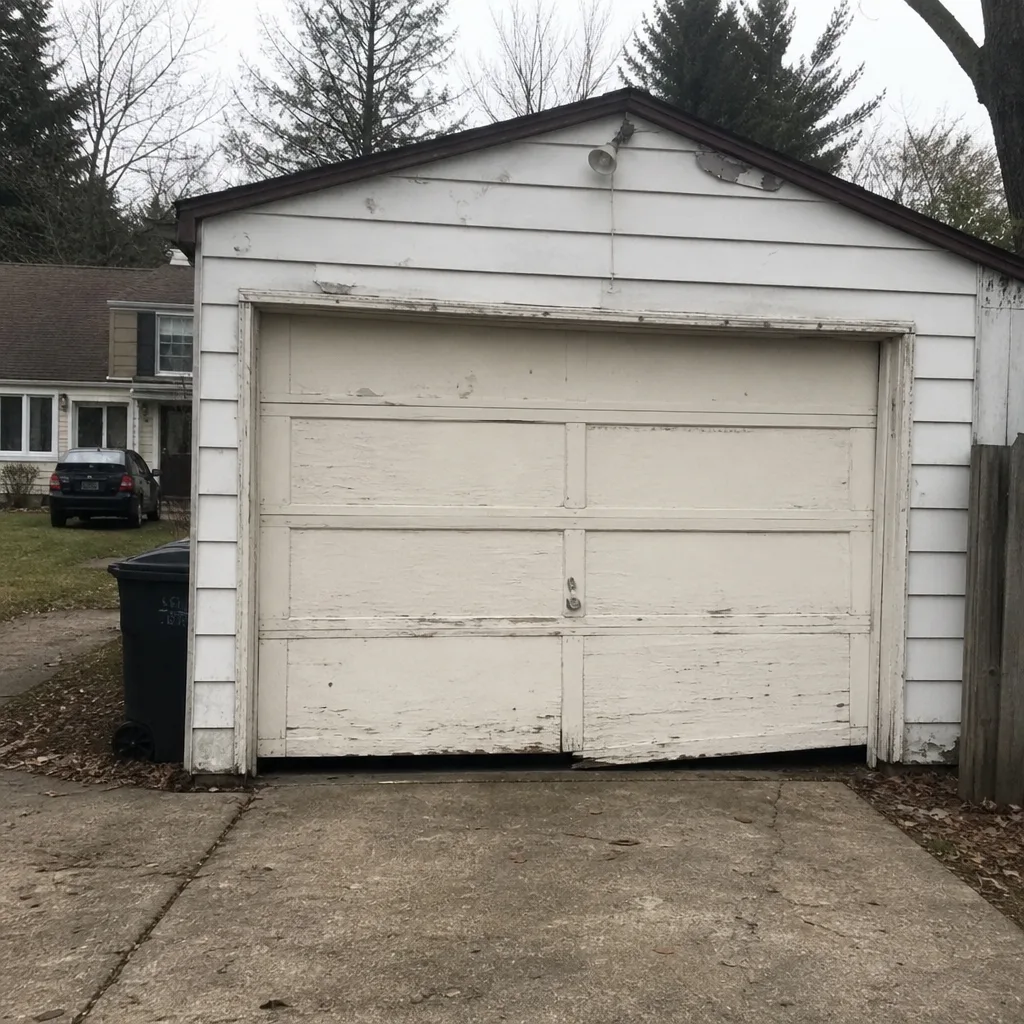 Before
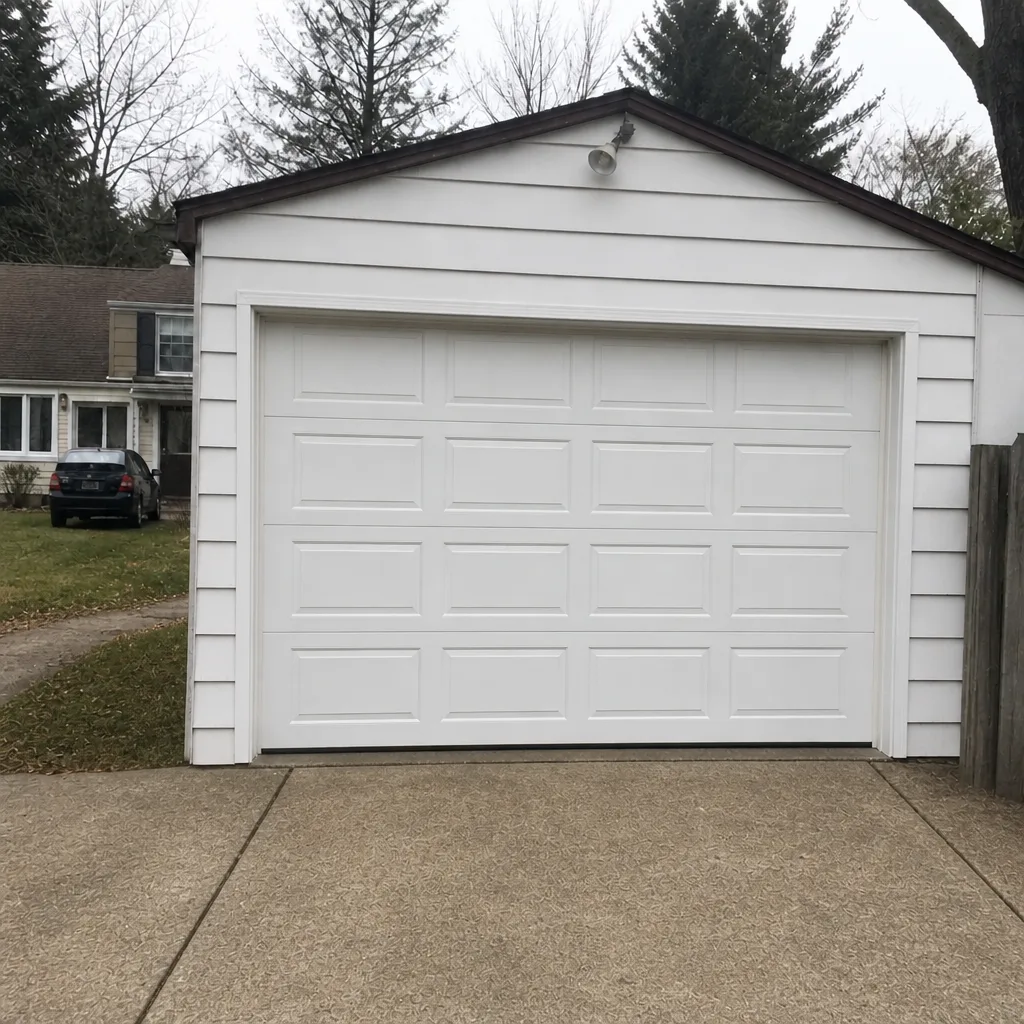 After
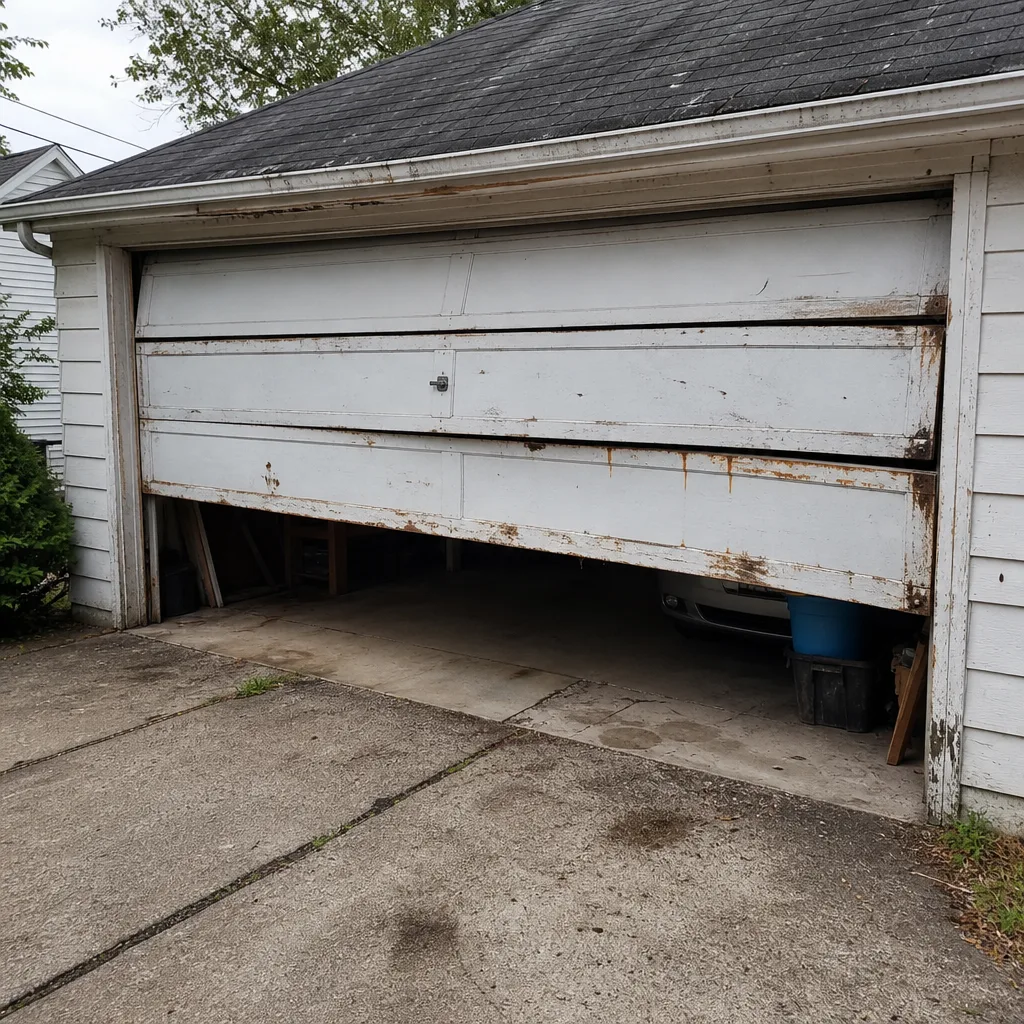 Before
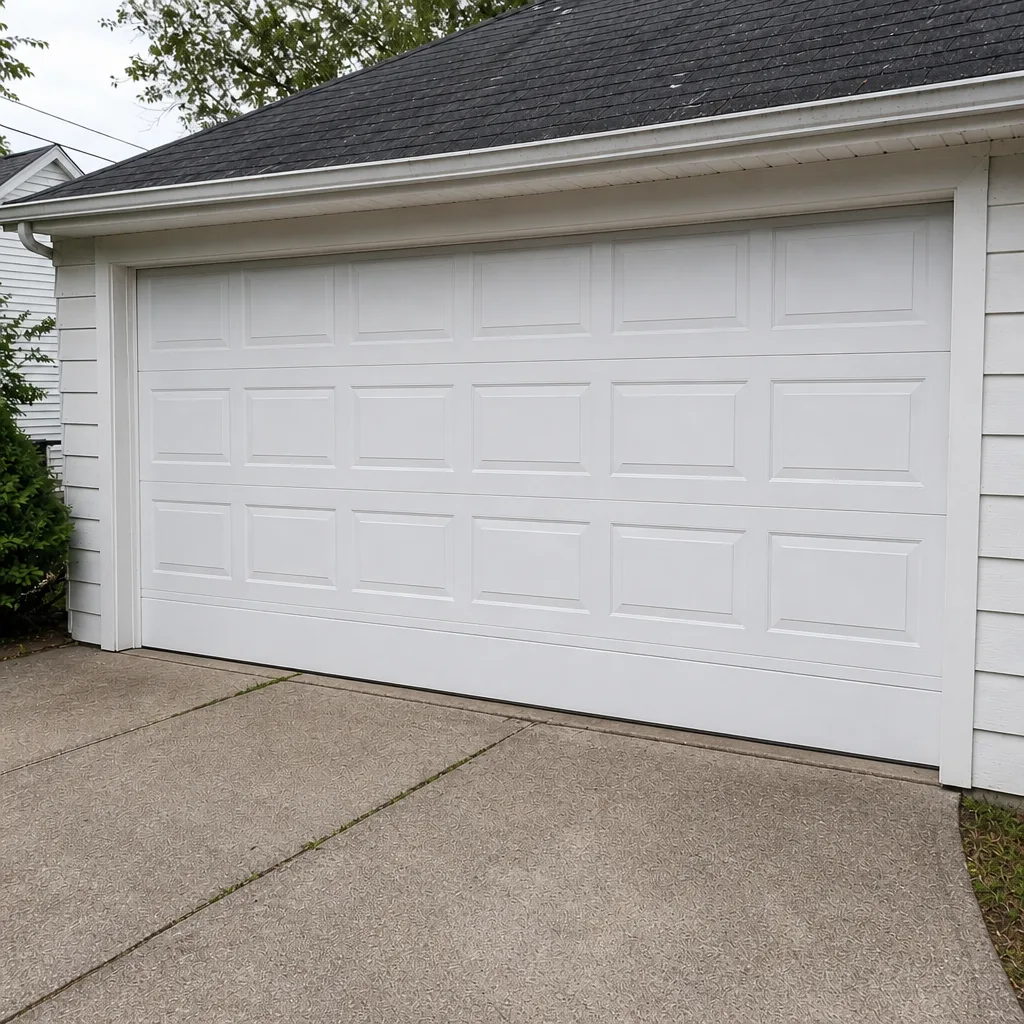 After
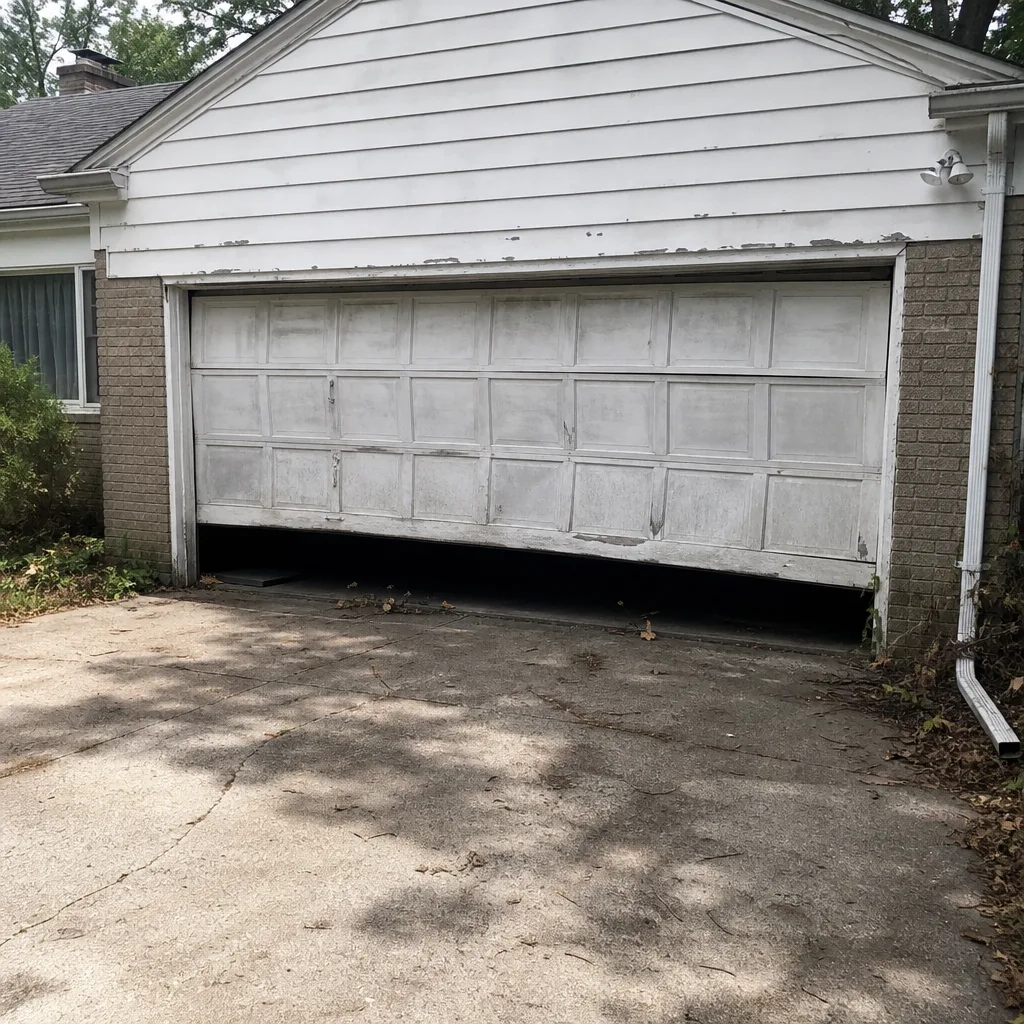 Before
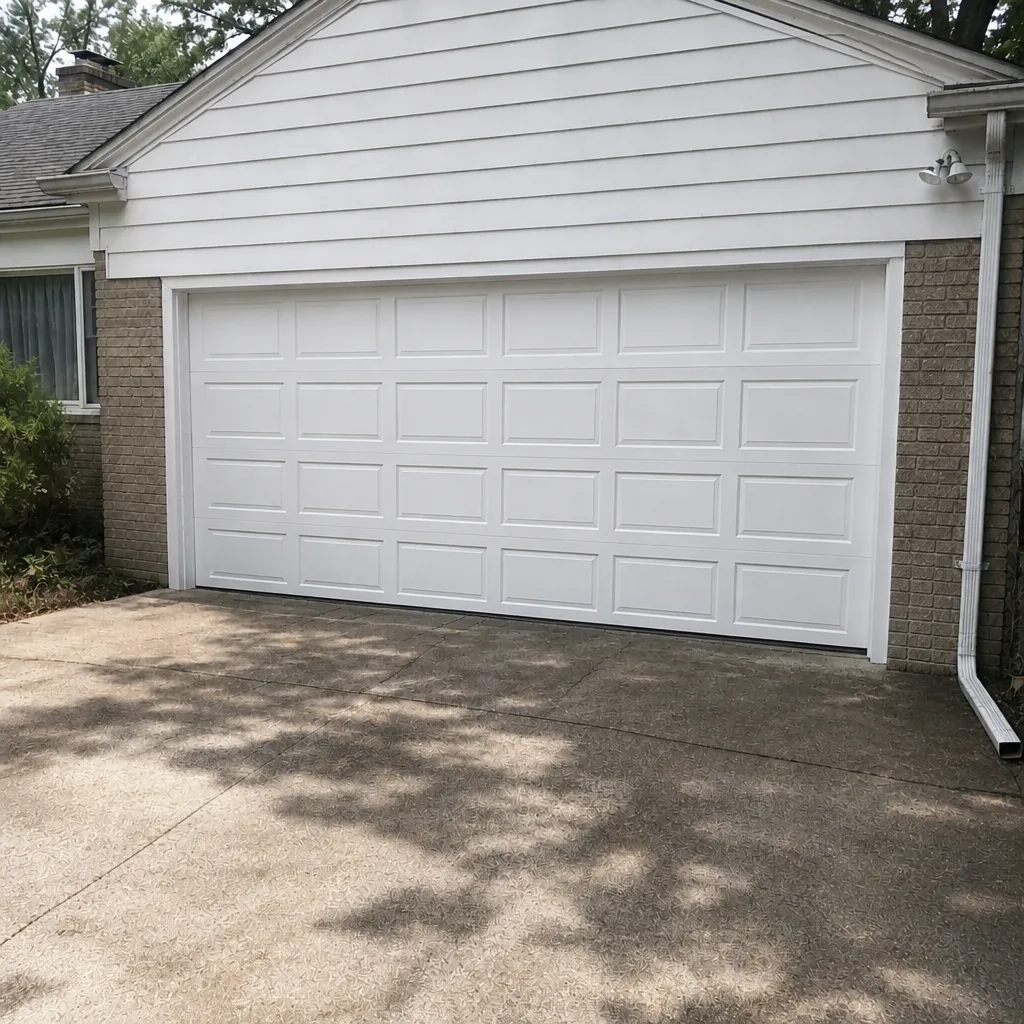 After
When to Call a Professional
Call a professional for anything involving a spring, a cable, or the internal mechanism of an opener. Those are the components that can hurt you. Call for a door that’s off its track, a door that reverses without reason, a photo-eye sensor that’s not responsive, a bottom seal that’s torn, or a door that sags when opened. Call if you hear a loud bang from the garage or find a coil of steel on the floor. And call when you’re planning a replacement so the measurements, the permit, and the installation are handled correctly the first time. Our team gives free estimates in Cuyahoga Falls. Call (877) 770-0890. We answer 24/7. Fast dispatch from 7am to 7pm, Sunday through Friday. If you’re dealing with a spring failure specifically, our garage door spring repair page walks through the exact process.
Frequently Asked Questions
Garage door repair in Cuyahoga Falls is priced per job by a written estimate, so the number depends on the part and the door. A new bottom seal or a single hinge is at the low end. A full spring replacement is at the higher end because the spring is the most mechanically demanding repair in the trade. Call (877) 770-0890 for an exact quote. Estimates are free, and we quote before any work starts.
We offer same-day and emergency service for doors that can’t wait, including broken springs, doors off track, and opener failures. Call (877) 770-0890. We answer 24/7, and we dispatch from 7am to 7pm, Sunday through Friday. A call outside dispatch hours is booked into the next opening, Sunday through Friday, 7am to 7pm.
In most cases a full door replacement in Cuyahoga Falls requires a permit, while a repair typically does not. The exact answer depends on your project and its scope. Confirm with the Cuyahoga Falls building department before any work starts. We’ll help you walk through the permit process for a replacement, and we’ll never tell you to skip it.
Count the failing parts. A single failing part is a repair. Multiple structural issues, rust at the bottom edge or around the hinges, or a door that flexes more than about a half inch when pushed in the center point toward replacement. Insulation loss and street-facing appearance are also factors. Ask for a written estimate for both options and compare them.
We are certified to service eight of the leading garage door and opener brands, including LiftMaster, Chamberlain, Genie, Clopay, Amarr, Wayne Dalton, Craftsman, and Raynor. That matters in Cuyahoga Falls where doors and openers on the same house are often different brands and different ages. Call (877) 770-0890 for an exact quote on your specific door and opener. Estimates are free.
We quote the price and agree it with you in writing before any work begins. The written estimate is the price you pay for the scope it describes. If we find something additional during the work, we stop and explain it before touching anything. Call (877) 770-0890 for a free estimate in Cuyahoga Falls.
The Bottom Line
Your door will outlast a lot of things in your house if it’s maintained for this climate. The freeze-thaw cycle that runs from late fall to early spring is the biggest threat, and the bottom seal and track alignment are where the damage starts. Replace the seal before winter, keep the track clean, and call a professional for anything involving a spring or a cable. Use the repair-versus-replace framework honestly, and don’t skip the permit on a full replacement. When you’re ready for a real answer on your specific door, we work on the brand you already have and we quote before we start.
Contact Us
Call (877) 770-0890 for a free estimate in Cuyahoga Falls. We answer 24/7. Fast dispatch from 7am to 7pm, Sunday through Friday. Our technicians have up to 10 years of experience, we’re certified to service eight of the leading garage door and opener brands, and we work on the door and opener you already own. Same-day and emergency service is available for broken springs, doors off track, and opener failures, and we handle everything from a single panel to a full new-door installation.
Written by the team at Cuyahoga Falls Garage Door Repair.